ServicesWall Repair
Wall Repair in Kearny, NJ
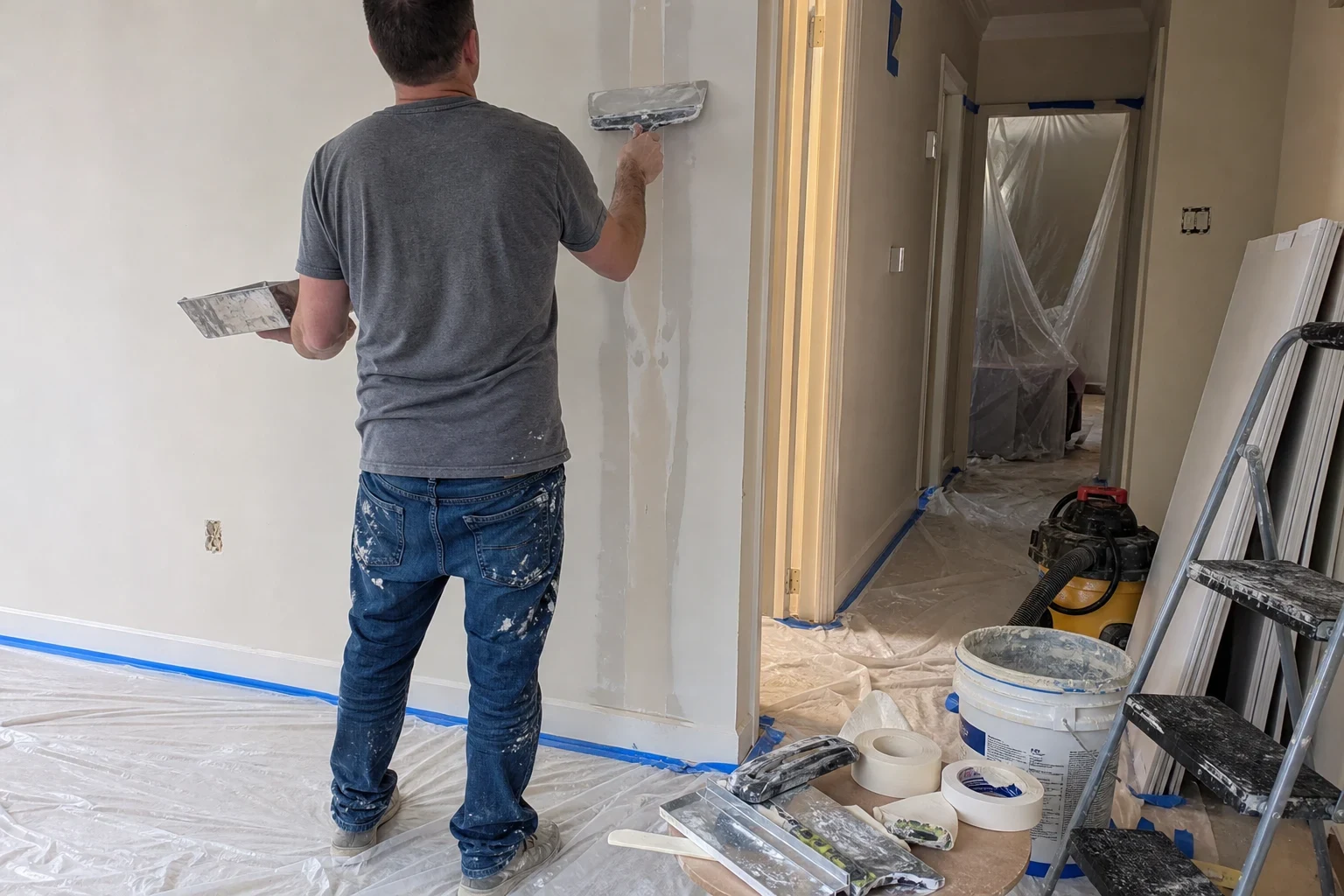
We repair cracked plaster, damaged drywall, broken corners and stained wall sections in your home. We find out why the wall failed first, then choose the repair that will last longest for what you spend, and we leave a clean work area behind.
Repairing the Wall, Not Just the Mark on It
Wall repair covers more than drywall. Many houses around Kearny still have original plaster over wood lath, and plenty have a mix: plaster in the old rooms, drywall in an addition or a redone kitchen. Each material fails differently. Plaster cracks when the keys that grip the lath break loose. Drywall fails at taped seams, screw heads and outside corners.
The cheapest fix is often a skim of compound over a crack. It looks fine for a season, then the crack telegraphs back through because the wall underneath still moves. We look at what is behind the surface and tell you plainly when a quick patch is enough and when reattaching plaster, cutting in new board or re-taping a seam costs a little more now and saves you a second repair later.
What Our Wall Repair Includes
Plaster crack and bulge repair
Where plaster has pulled away from the lath, we secure it with plaster washers and screws before filling. Then we bridge the crack with fiberglass mesh and setting compound so seasonal movement does not reopen it.
Holes from doorknobs, anchors and impacts
Small holes get a setting-type filler. Larger ones get a cut-out and a backed patch screwed to blocking or furring, so the patch cannot flex. For bigger cut-and-replace work, see our drywall patching page.
Outside corner bead
Dented or rusting metal corner bead is cut out and replaced, often with paper-faced bead that bonds better with compound and resists cracking along the edge.
Seam and nail pop repair
Popped fasteners are reset with drywall screws just beside the old nail. Bubbled or cracked tape is cut back and re-taped instead of buried under more mud.
Water-stained wall sections
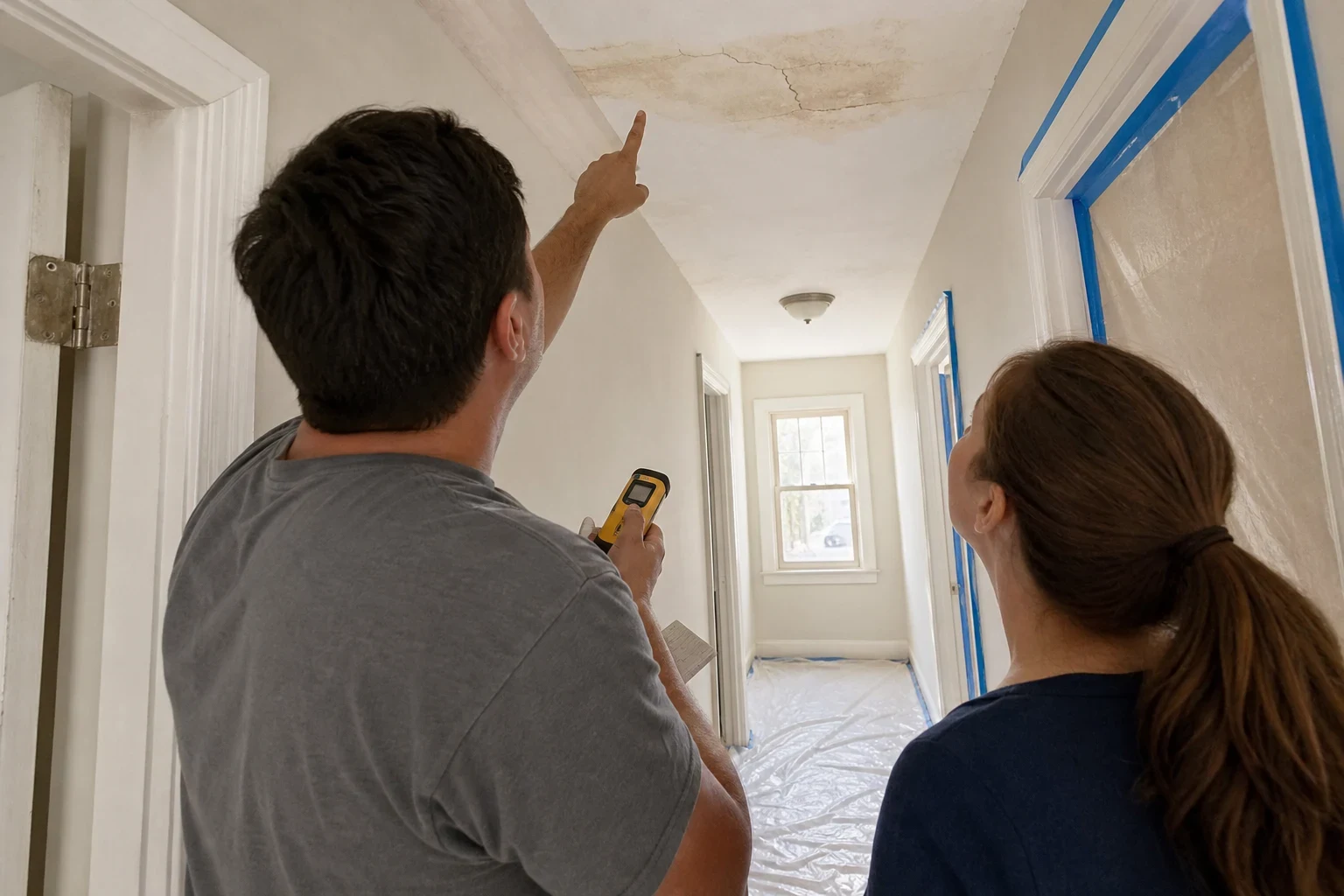
Once the leak has been fixed by others and the wall is dry, we cut out soft or crumbling material, replace it and seal the surrounding area with a stain-blocking primer so the mark does not bleed through.
Texture matching and primer
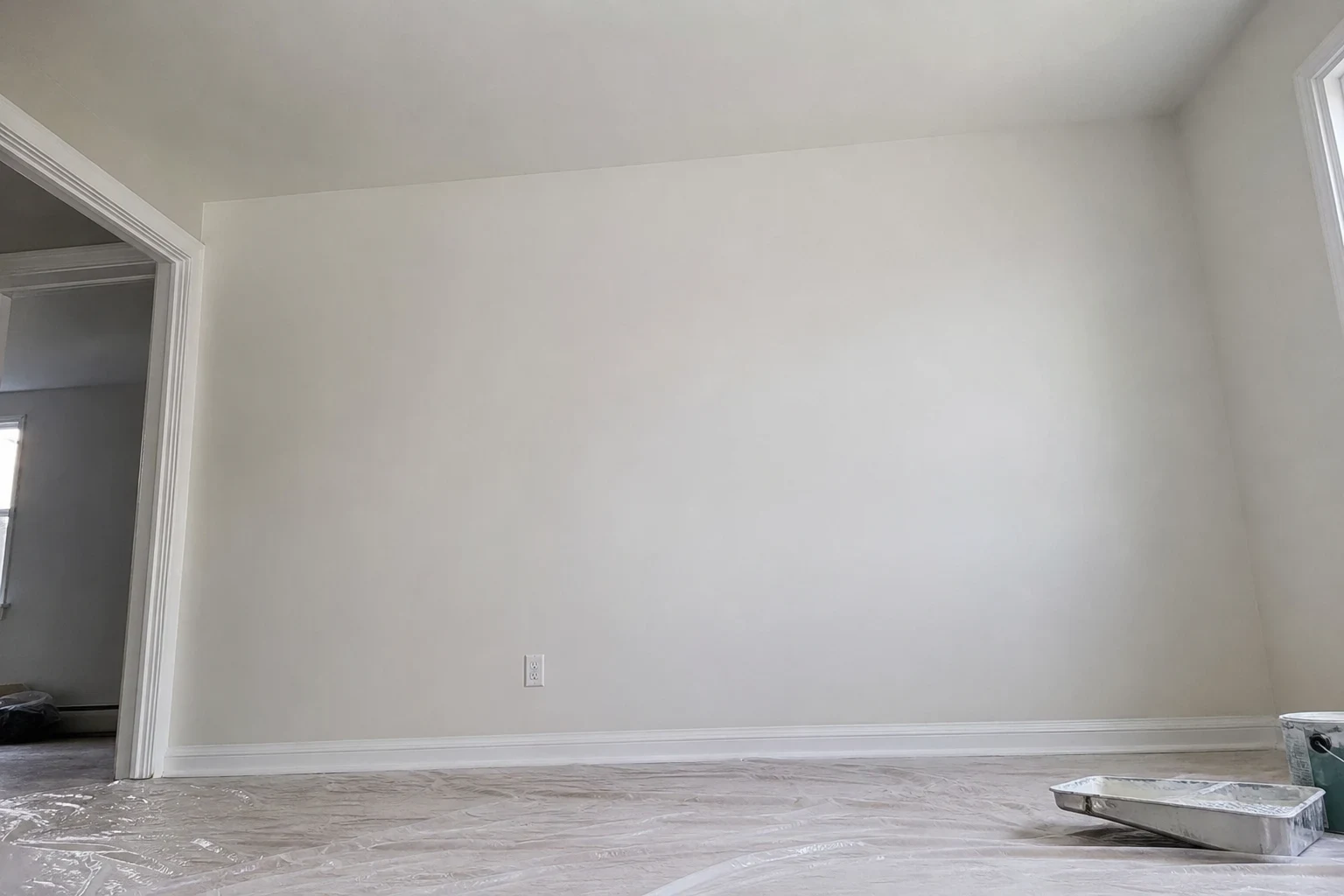
We match the existing surface, from smooth plaster to sand or orange-peel texture, and prime the finished repair. Paint touch-ups are available as a separate service if you want the color blended too.
Signs Your Wall Needs Repair
- Cracks that come back
- A crack that returns after filling usually means loose plaster or an untaped joint is still moving. Filling it again will not stop it.
- Diagonal cracks off door and window corners
- These form where framing shifts and stress concentrates at the corners of openings. They need mesh or tape reinforcement, not caulk.
- Soft or hollow-sounding plaster
- Press gently near a crack. If the plaster gives or sounds hollow when tapped, the keys have broken and the section needs reattaching before it sags.
- Brown rings or peeling paint
- Staining or blistering paint points to past moisture. The gypsum behind may be weakened even if the surface still looks firm.
- Chipped corners and doorknob holes
- Constant contact keeps damaging these spots. A repair with better corner bead or a properly backed patch holds up far longer than spackle.
How a Wall Repair Job Runs
- 1
Phone call and description
You tell us what the wall looks like, how long the damage has been there and whether it is plaster or drywall if you know. We ask a few questions and set a time to see it.
- 2
Inspection and written estimate
We check for loose plaster, moisture and moving seams, take photos of what we find and explain the repair options with their trade-offs. You get a line-item estimate before any work starts.
- 3
Protection and repair
We lay drop cloths, mask nearby trim and floors, and contain dust where we cut. Setting compound is applied in coats, with drying time between them, so the repair cures hard instead of shrinking.
- 4
Sanding, texture and cleanup
We sand the repair flat, match the texture, prime and vacuum the work area. Larger jobs may need a second visit for final coats.
What Moves the Cost of Wall Repair
Price depends on what the wall is made of and how far the damage goes beneath the surface. A firm repair that addresses the cause usually costs more than a cosmetic fill, but you pay for it once. We price each job after seeing it and put every line in writing.
- Plaster versus drywall
- Plaster repairs take more steps: reattaching, bonding agent and several coats of setting compound. Drywall repairs are usually quicker unless seams or framing are involved.
- Size and number of areas
- One hole and five scattered cracks are different jobs. Grouping repairs into a single visit lowers the cost per area.
- Hidden damage
- Moisture-softened gypsum, broken lath or rusted corner bead found during the work can change the scope. We show you photos and talk before going further.
- Texture and finish level
- Smooth plaster and heavy textures take more time to blend than a flat painted drywall surface.
Wall Repair Questions
- Should I repair my plaster walls or replace them with drywall?
- If the plaster is mostly sound, repair is usually the better value. It is dense, quiet and durable, and tearing it out creates a lot of mess and cost. When large areas are crumbling or detached, covering or replacing with drywall can make more sense, and we will tell you which side of that line your wall is on.
- Why did the crack I filled last year come back?
- Most likely the filler was a lightweight spackle laid over a crack that still moves. Without mesh or tape and a hard-setting compound, the wall's normal movement reopens it. We secure the plaster or re-tape the joint first.
- Can you repair a wall that got wet?
- Yes, once the source of the water has been fixed and the wall has dried out. We cut out any soft material, replace it and seal the area with a stain-blocking primer so the stain does not return through the finish.
- Will the repair match the rest of the wall?
- We match texture and prime the repair so it is ready for paint. If you want the color blended in, we can handle that through our paint touch-ups service.
- How much dust should I expect?
- Cutting and sanding make dust, so we mask the area, cover floors and furniture, and vacuum when we finish. Small repairs leave very little behind.
Get the Wall Fixed Once
Tell us what the crack, hole or stain looks like and we will explain what is likely behind it and how we would repair it. Your quote comes by phone after we have seen the wall.