ServicesDrywall Patching
Drywall Patching in Kearny, NJ
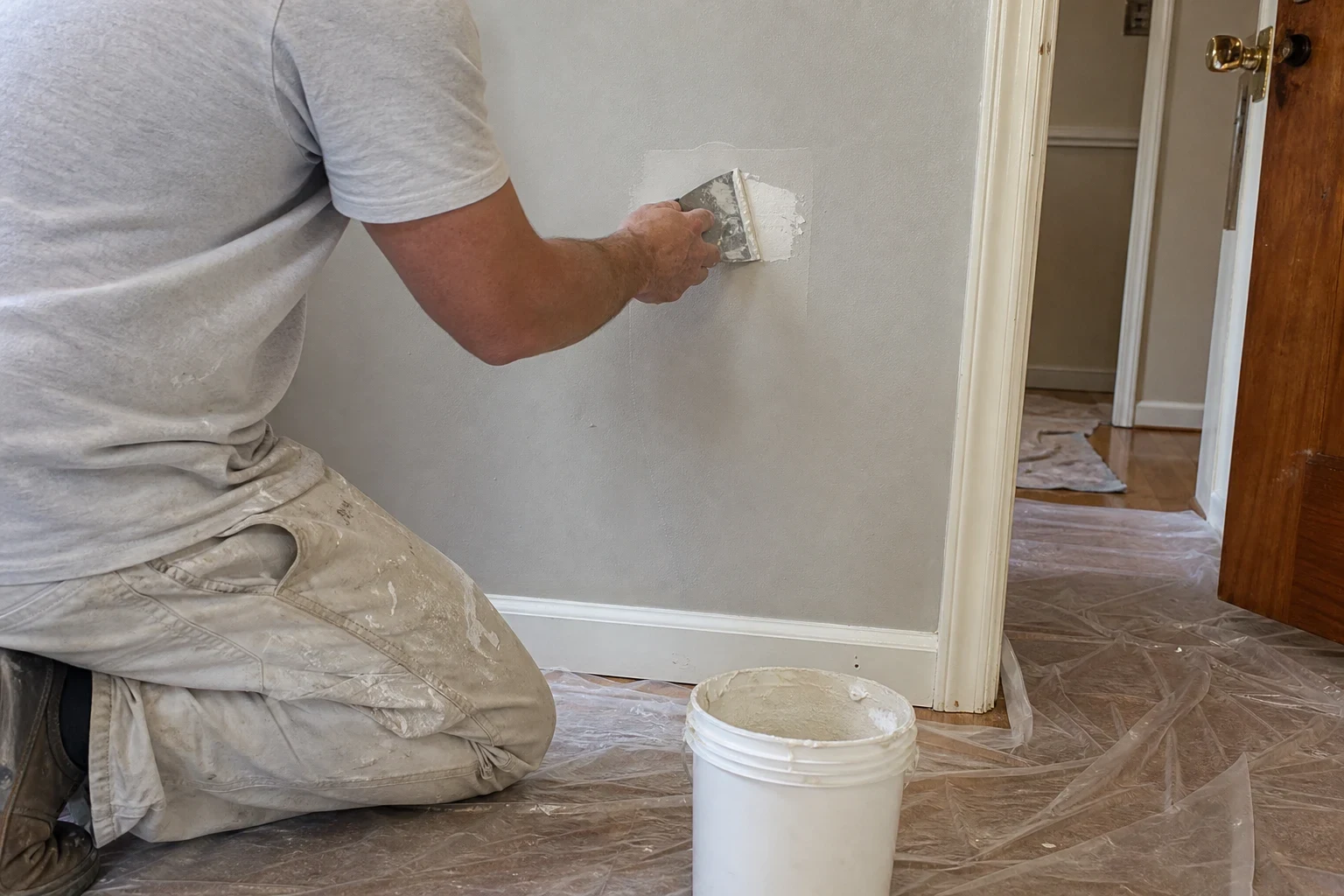
We patch holes in drywall so they stay closed and stay invisible. That means a solid backer behind the opening, setting compound instead of spackle alone, and a finish feathered wide enough that the patch disappears under paint instead of showing as a bump or a crack next year.
A Patch Should Outlast the Paint Over It
Most failed patches we see were done fast: a stick-on mesh square, one coat of lightweight spackle, a quick sanding. It looks fine for a few months. Then the door handle hits it again, or the house moves with the seasons, and a hairline crack outlines the square. Fixing that means cutting it all out and starting over, so the cheap patch ends up costing twice.
Our patches are built for the hit they took. Small holes from anchors and nails get filled and feathered. Larger holes are cut square to sound drywall, backed with wood or a drywall-to-drywall clip, fitted with a matching piece, taped, and coated with setting-type compound that cures hard and shrinks very little.
If the damage is bigger than a few openings, such as a long split seam or a water-stained section, our drywall repair page covers that work. Patching is for defined holes and dents in otherwise sound walls.
What Our Patching Work Includes
- Cutting back to sound board
- We trim torn paper and crushed gypsum until the edges are firm. Compound will not bond to loose face paper, which is why patches over ragged edges bubble.
- Backing behind the hole
- Openings larger than a few inches get a wood backer screwed through the existing board, or clips that lock the new piece to the old. The new drywall then has something to fasten to and cannot flex inward.
- Matched board thickness
- We measure the wall first, usually half-inch on walls and five-eighths on many ceilings, so the patch sits flush and doesn't need a thick hump of mud to hide a step.
- Tape and setting compound
- Seams get paper or mesh tape bedded in setting compound, then lighter topping coats. Setting compound cures chemically, so it resists cracking at the joint better than air-dry spackle.
- Feathered finish and texture matching
- Each coat goes wider than the last, often well past the hole, so the edges taper out with no ridge. Where a wall has orange peel or a light knockdown, we match the texture before priming.
- Primer on the patch
- Bare compound absorbs paint differently than the painted wall around it and shows as a dull spot. We seal the patch with primer so the finish coat looks even.
Signs a Hole Needs a Proper Patch
Doorknob punched through
A round hole behind a door means no stop or a missing one. We patch it and suggest a door stop so the repair isn't hit again.
Old patch outlined by cracks
A square or circle showing through the paint is a mesh patch that has shifted. It needs to come out, not get another skim coat.
Holes from removed fixtures
Toggle bolts, TV mounts and old cable boxes leave anchor craters and cut-outs that filler alone won't hold.
Dents that crushed the core
If the paper is intact but the wall feels soft when pressed, the gypsum behind it is broken. We cut it out rather than filling over a hollow spot.
Access cuts left open
After an electrician or another trade opens a wall, the cut-out piece is often too damaged to reuse. We fit new board and finish it flat.
How a Patching Visit Runs
- 1
Look and measure
We check each hole, the board thickness, the texture and whether older plaster is involved, which is common in the area's older homes. You get a clear scope and price before work starts.
- 2
Protect and cut
Drop cloths go down and furniture nearby is covered. We square up each hole and install backing.
- 3
Fit, tape and coat
The new piece is screwed in, taped and given its first coat of setting compound. Later coats go on once the earlier one has set, which may mean a return visit for larger patches.
- 4
Sand, texture, prime
We sand with dust control, match the surface texture and prime the patch. The work area is vacuumed and wiped down before we leave.
What Sets the Price of a Patch
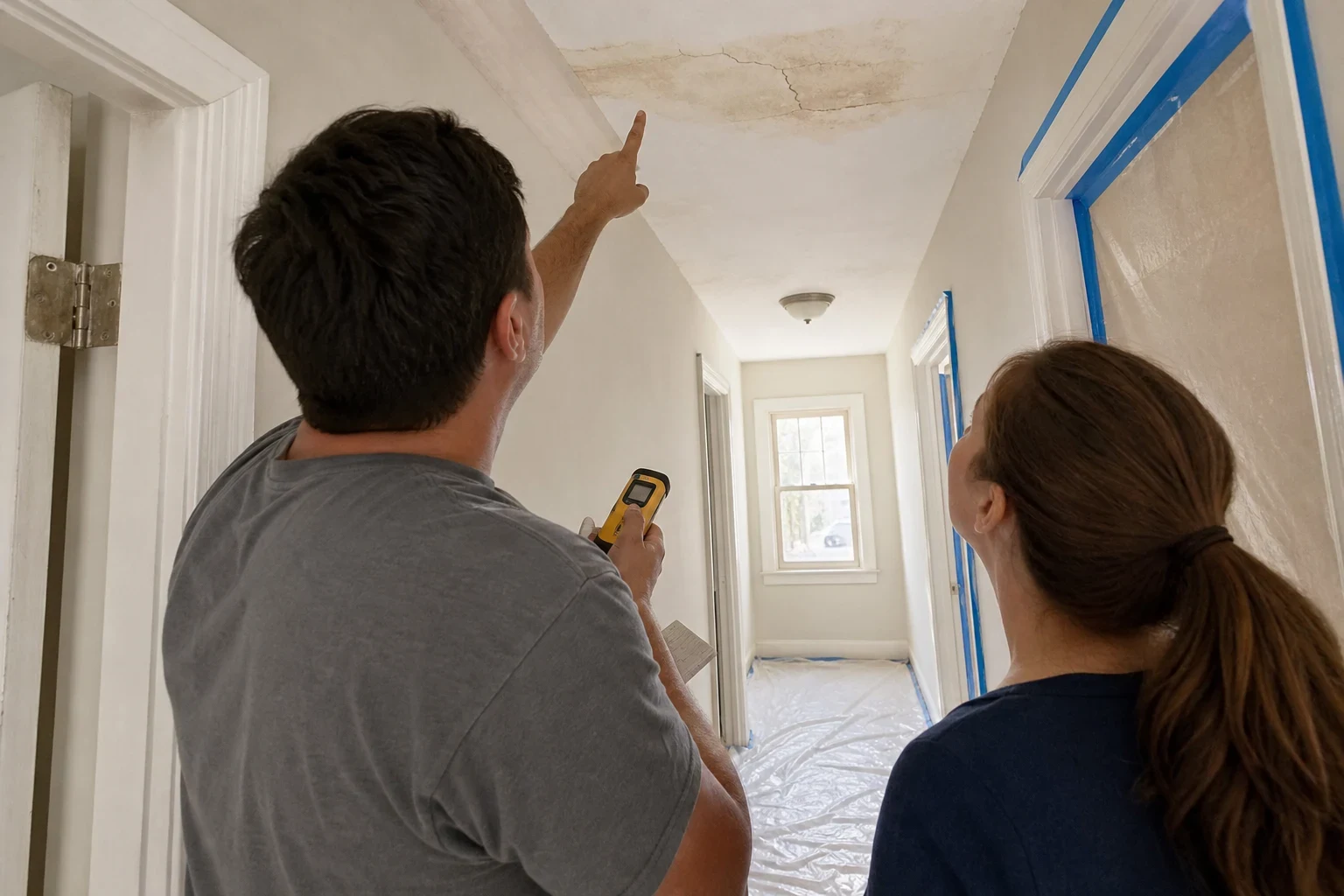
Patching is priced by what each hole needs, not a flat rate per visit. A dozen anchor holes and one doorknob hole are very different jobs. We go through each opening with you and quote it before we start.
- Size and number of holes
- Nail and anchor holes are quick fills. Anything needing a new piece of board takes several coats and drying time.
- Backing and framing
- A hole next to a stud is simpler than one in open space that needs a wood backer installed first.
- Wall material and texture
- Plaster or plaster over lath takes different materials than drywall. Textured surfaces add a matching step.
- Ceilings and height
- Overhead patches take longer and may need staging. Larger ceiling damage is handled under ceiling repair.
- Finish after priming
- If you want the patch painted to blend, paint touch-ups add a step. Touching up a whole wall section often blends better than spotting one square.
Drywall Patching Questions
Something not covered here? (201) 806-6572
Can't I just use a stick-on patch kit?
For a nail hole, a little filler is fine. For anything larger, mesh kits sit on top of the wall and rely on thin compound to hide them, so the edges usually show or crack. A backed patch costs more up front but doesn't need to be redone.
Will I be able to see where the patch was?
Not if it's feathered wide, primed and painted to match. The usual giveaway is unprimed compound or a raised ridge, and we avoid both. Very old or faded paint can make an exact color blend harder, which we'll tell you before starting.
How long does a patch take?
Small holes are often finished in one visit. Patches with new board usually need multiple coats, and even with fast-setting compound larger ones can take a second trip to sand and prime properly.
Do you patch plaster walls?
Yes. Many older homes have plaster, and we patch it with materials that bond to it and match its hardness. Drywall compound alone over plaster tends to crack at the edge.
Is there much dust?
Some sanding is unavoidable, but we keep it contained. We sand by hand or with vacuum-attached sanders, cover nearby belongings and clean the area before leaving.
Patch It Once and Forget About It
Tell us how many holes you have and roughly how big they are. We'll explain what each one needs, from Kearny to Harrison and Belleville, and price the job clearly.