ServicesPainting After Drywall
Painting After Drywall Work in Kearny
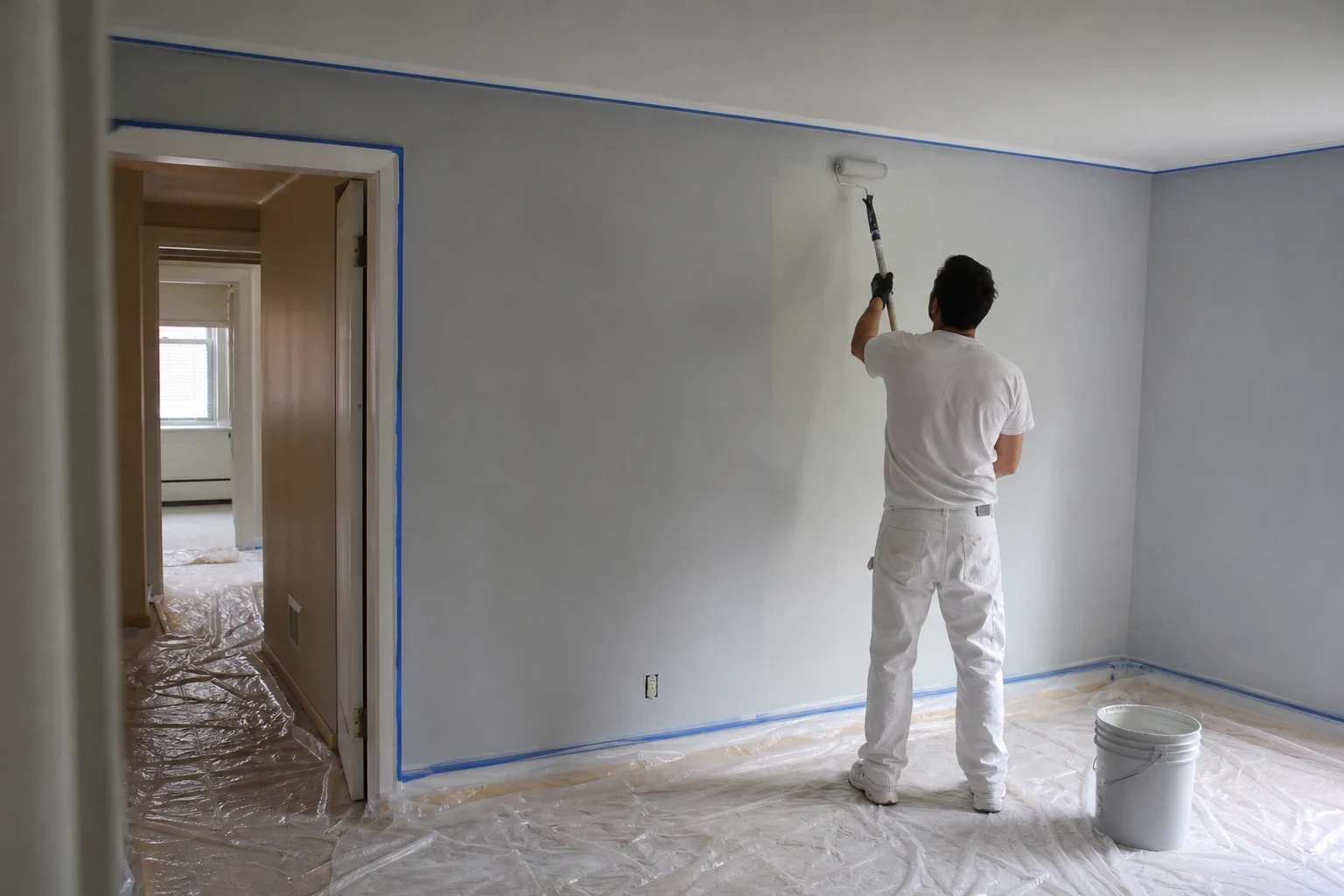
New or repaired drywall isn't done until it's primed and painted. We seal fresh joint compound and face paper with the right primer, then roll finish coats so patches, seams and new sheets disappear under one even color and a sheen that stands up to cleaning.
Why painting over drywall is its own job
Joint compound and drywall face paper absorb paint at different rates. Skip the primer and the compound soaks up the first coat, leaving dull or shiny spots called flashing that show through every coat after. That's why we treat painting as the last stage of our drywall repair, hanging and finishing work, not an afterthought.
We paint the walls and ceilings our drywall work touches, so the repaired area and the surrounding surface match. On a single patch, that usually means repainting the wall corner to corner rather than dabbing the spot, because a spot coat on older paint almost always shows when light hits the wall at a low angle.
We'll also tell you where the money lasts longest. A washable eggshell or satin costs more per gallon than flat, but in a hallway or a kid's room it survives scrubbing instead of needing another repaint soon.
What the painting stage covers
Primer matched to the surface
Fresh drywall and compound get a PVA or high-build drywall primer that evens out porosity. Water stains and smoke marks get a stain-blocking primer, oil or shellac based, so they don't bleed back through latex.
Flat white on ceilings
Ceilings get a flat finish that hides the small shadows of seams and fastener heads. Any sheen overhead magnifies flaws under window light.
Wall coats corner to corner
We cut in at corners, trim and the ceiling line with a brush, then roll the field wet edge to wet edge. Painting the full wall keeps the repaired area from reading as a different color.
Sheen chosen for the room
Matte for low-traffic bedrooms, eggshell for living areas, satin for kitchens, hallways and baths where walls get wiped. In bathrooms we use a mildew-resistant paint over moisture-resistant board.
Protection and cleanup
Floors get drop cloths, furniture is moved or wrapped, and outlet covers come off before we start. We leave a clean work area with the cover plates back on.
Signs your drywall needs proper primer and paint
- Patches with a different sheen
- If a patch looks duller or shinier than the wall around it, the compound was painted without primer. Another coat of paint alone won't fix it; the area needs primer first.
- Seams showing through paint
- Tape joints that show after painting often had too little primer or the wrong sheen. Sometimes the joint itself needs more finishing before paint can hide it.
- Stains coming back
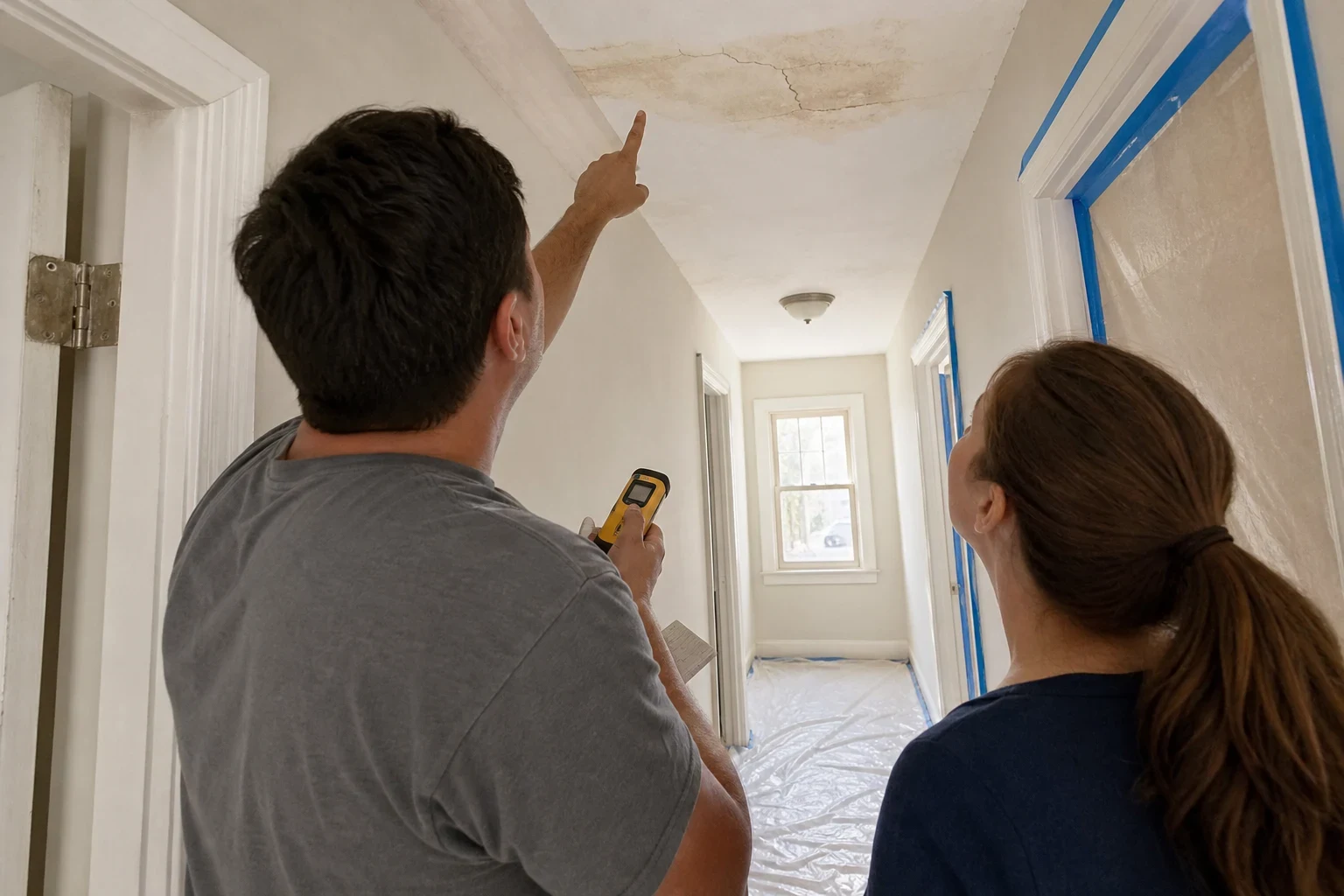
- Brown rings from an old leak or yellow marks from smoke return through latex within weeks. A stain-blocking primer locks them in.
- Bare new drywall
- Sheets that were hung and taped but never painted collect dust and scuffs on the paper face. Priming seals them.
- Paint that wipes off
- Flat paint in a busy hallway wears through with a damp cloth. Recoating with a scrubbable eggshell or satin stops the cycle of repaints.
How a painting day runs
- 1
Check the surface first
We look at the finished drywall under a work light held low to the wall. Ridges, pinholes and sanding scratches get fixed before primer, because paint shows them more, not less.
- 2
Prep and protect
We lay drop cloths, mask trim and floor edges, pull cover plates and wipe sanding dust off the walls. Dust left on the surface keeps primer from bonding.
- 3
Prime and inspect again
Primer goes on and dries per the label. It reveals flaws that bare compound hides, so we spot-fix and re-prime anything that shows.
- 4
Two finish coats
We cut in and roll two coats, letting the first dry fully. Two coats give even color and the film thickness the manufacturer rates for washability.
- 5
Walkthrough and cleanup
We walk the room with you, replace cover plates and pull up protection. Leftover paint gets labeled by room so later touch-ups match.
What moves the cost of painting after drywall work
Paint is a small share of the bill; labor and prep make up most of it. We give you a written line-item estimate so you can see where the money goes and weigh a cheaper paint against one that lasts longer between repaints.
- Area and ceiling height
- Square footage of walls and ceilings sets the base. High ceilings and stairwells need ladders or planks and take longer to cut in.
- Condition of the surface
- Well-finished new drywall needs one primer coat. Many older homes around Kearny carry layers of oil paint that new latex won't grip without deglossing and a bonding primer, which adds a step.
- Paint grade and sheen
- Premium washable paints cost more up front but cover in fewer coats and stand up to cleaning. In a rental unit or busy hallway that usually means fewer repaints over time.
- Color changes
- Going from dark to light, or the reverse, can add a tinted primer coat or a third finish coat.
- Furniture and access
- Empty rooms go faster. Rooms full of furniture take time to move and cover, and that time is part of the labor.
Questions about painting after drywall work
- Can you paint just the patch instead of the whole wall?
- For very small spots on recent paint, sometimes, and our Paint Touch-Ups page covers when that works. On older paint, even an exact color match usually shows because the old film has faded and its sheen has changed. Painting the wall corner to corner costs more labor up front but avoids a visible square you'd end up repainting anyway.
- Why do I need primer if the can says paint and primer in one?
- Self-priming paints work over previously painted walls in decent shape. Bare joint compound and drywall paper are too porous and uneven for them, and the result flashes. A dedicated drywall primer costs less per gallon and does that job better.
- How soon can we use the room?
- Latex is dry to the touch in about an hour and ready to recoat in a few hours, so most rooms are usable by evening once we've cleaned up. Paint takes a few weeks to cure fully, so hold off on scrubbing walls or pushing furniture tight against them.
- What paint works best in a bathroom?
- A satin or semi-gloss labeled mildew resistant, over moisture-resistant drywall where board was replaced. The tighter film sheds steam better than flat. Running the exhaust fan during and after showers matters as much as the paint.
- Do you supply the paint or do I?
- Either works. If you know the brand and color already on the walls, we can use it so future touch-ups match. If not, we'll recommend a grade and sheen and list it on the estimate.
Get primer, sheen and paint grade sorted before the first coat
Tell us what drywall work you've had done or still need, which rooms are involved and how they're used. We'll talk through the options and set up a written estimate.