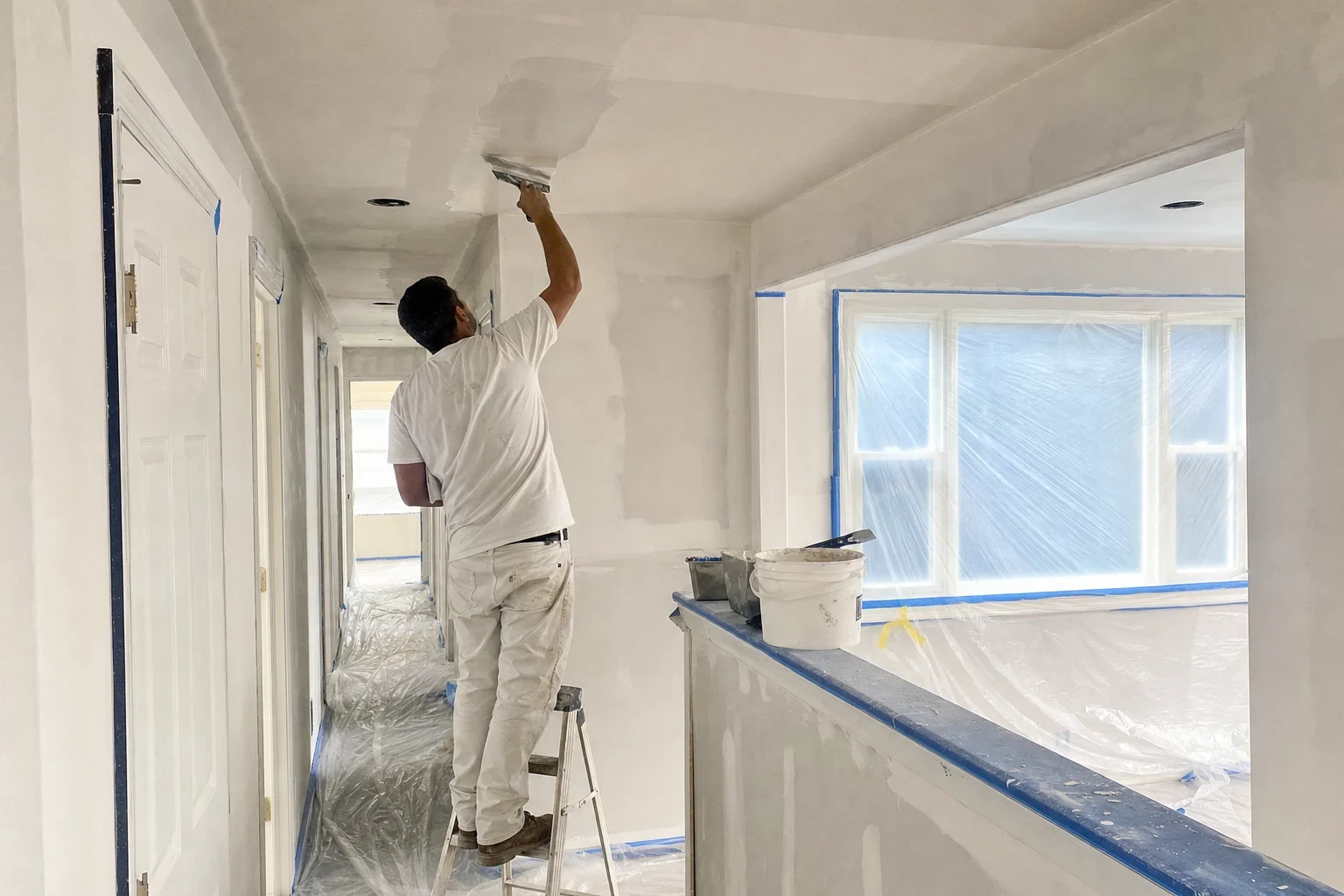
Drywall Repair in Kearny Built to Outlast the Quick Fix
We repair cracked, dented and water-damaged walls and ceilings, hang and finish new drywall, and blend paint touch-ups over every repair. Before any work starts, we explain what a repair costs now and how long it should last. We work in Kearny, Harrison, Belleville and nearby towns.
- Written line-item estimates
- Honest repair-or-replace answers
- Texture matched to your walls
- Clean work area daily
Drywall and Ceiling Work We Handle
Most calls start with one problem: a doorknob hole, a crack that keeps coming back, a stained ceiling after a leak upstairs. We handle drywall repair and drywall patching for those, plus drywall hanging and drywall finishing when a section or a whole room needs new board. Wall repair and ceiling repair cover plaster and drywall alike, and surface preparation and sanding gets old walls smooth before finish work. Each job ends with paint touch-ups so the repaired area blends into the wall around it.
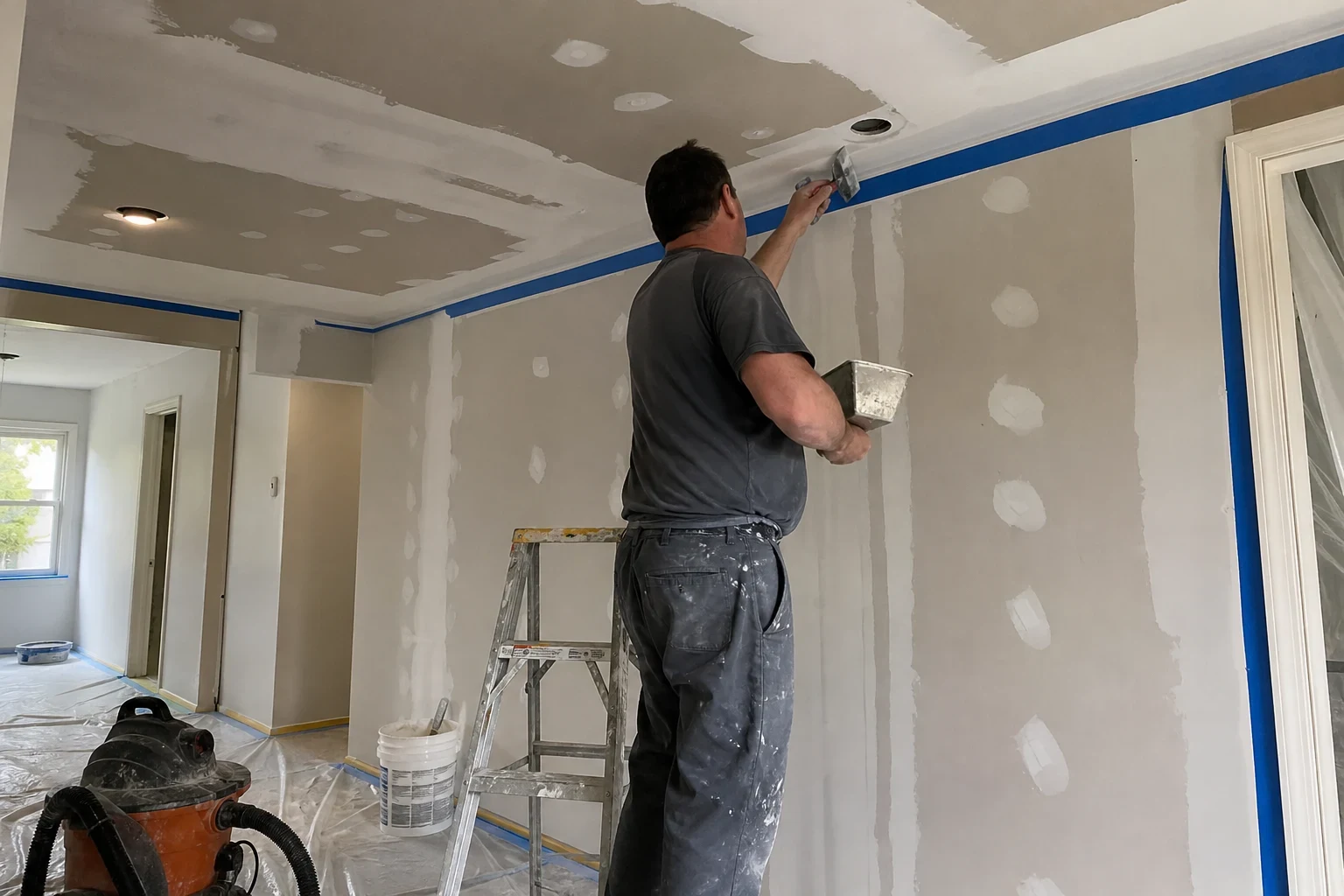
Drywall Repair
Cracks, nail pops, dents and water-damaged board repaired at the source, with joints rebuilt and texture matched to the wall around it.
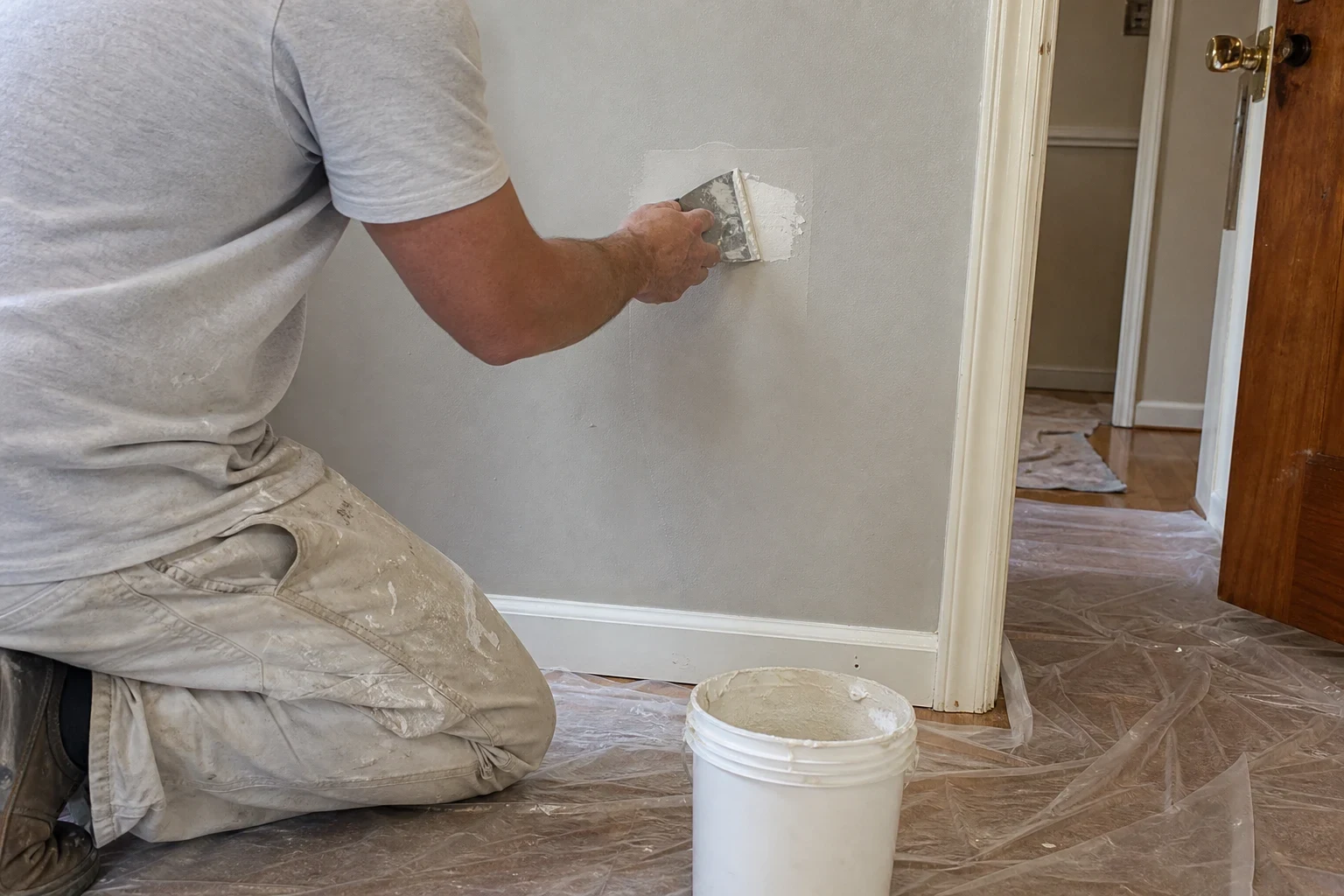
Drywall Patching
Doorknob holes, anchor scars and cut-outs patched with real backing and setting compound, then feathered and primed so the patch doesn't crack later.
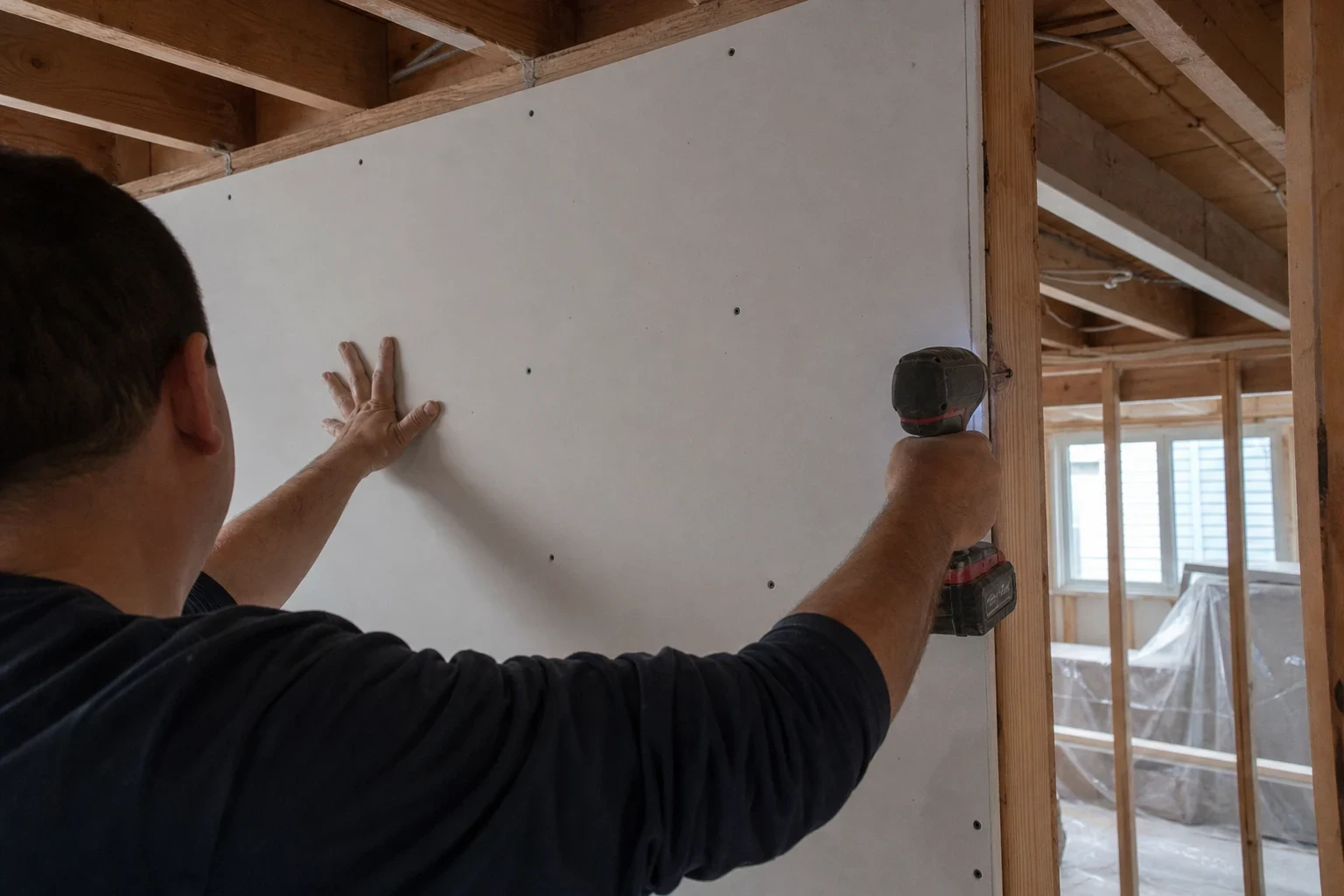
Drywall Hanging
New drywall hung with the correct board type, sheet layout and fastening, so walls and ceilings stay flat and crack-free.
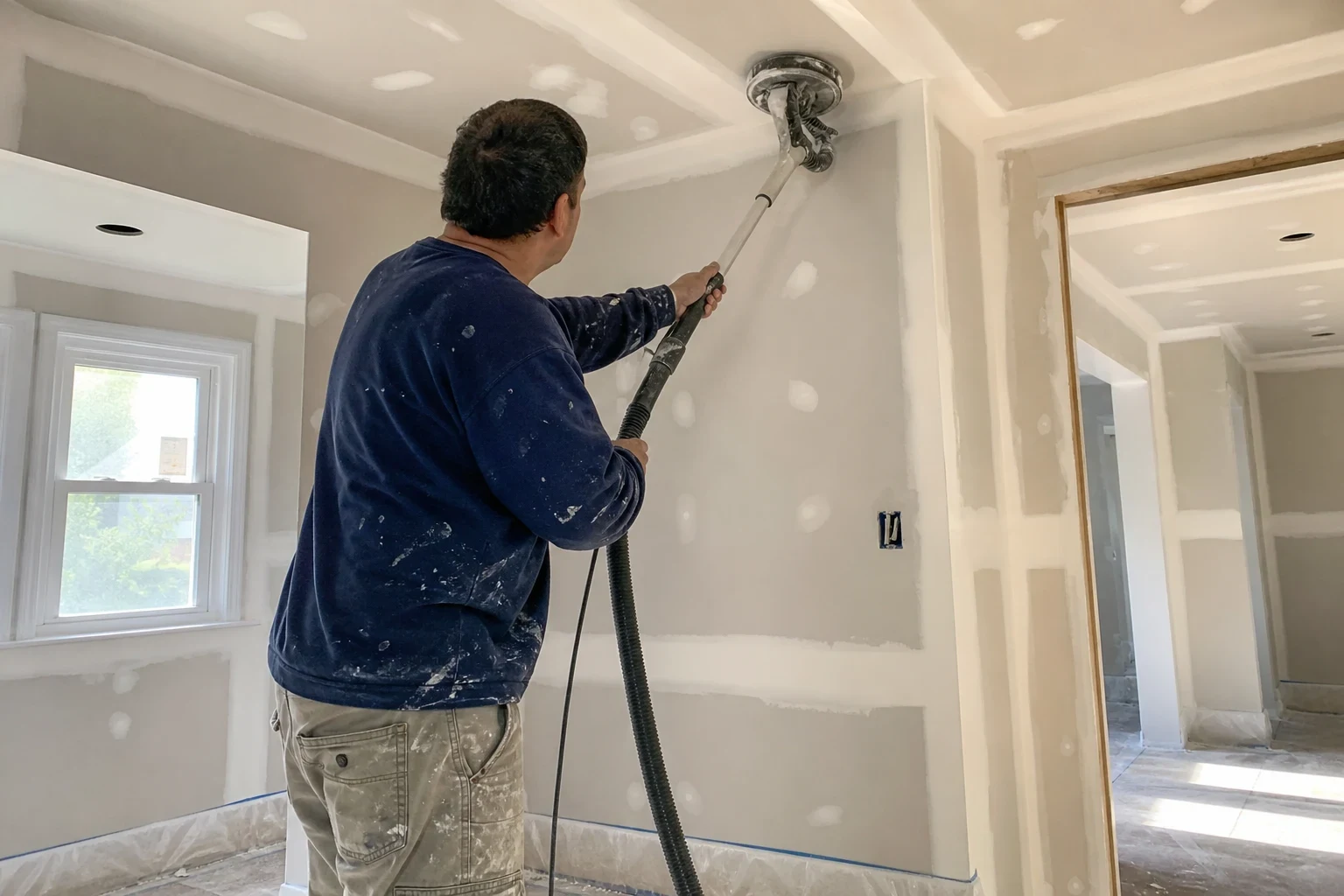
Drywall Finishing
Taping, mudding and sanding new or repaired drywall to the finish level your lighting and paint call for, so seams and fasteners stay hidden for years.
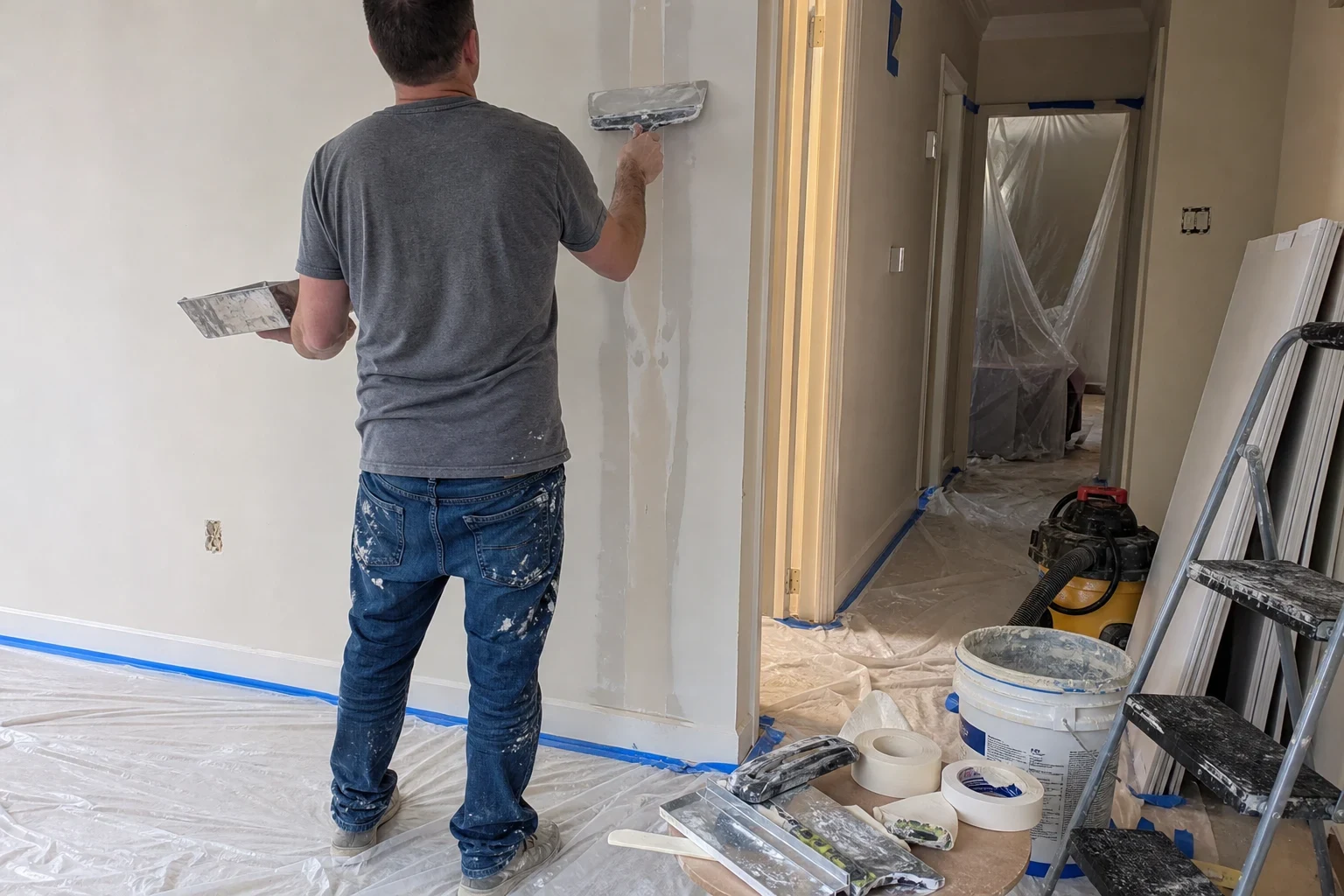
Wall Repair
Cracked plaster, split corner bead, anchor holes and water-stained walls repaired at the cause, so the same crack does not return next winter.
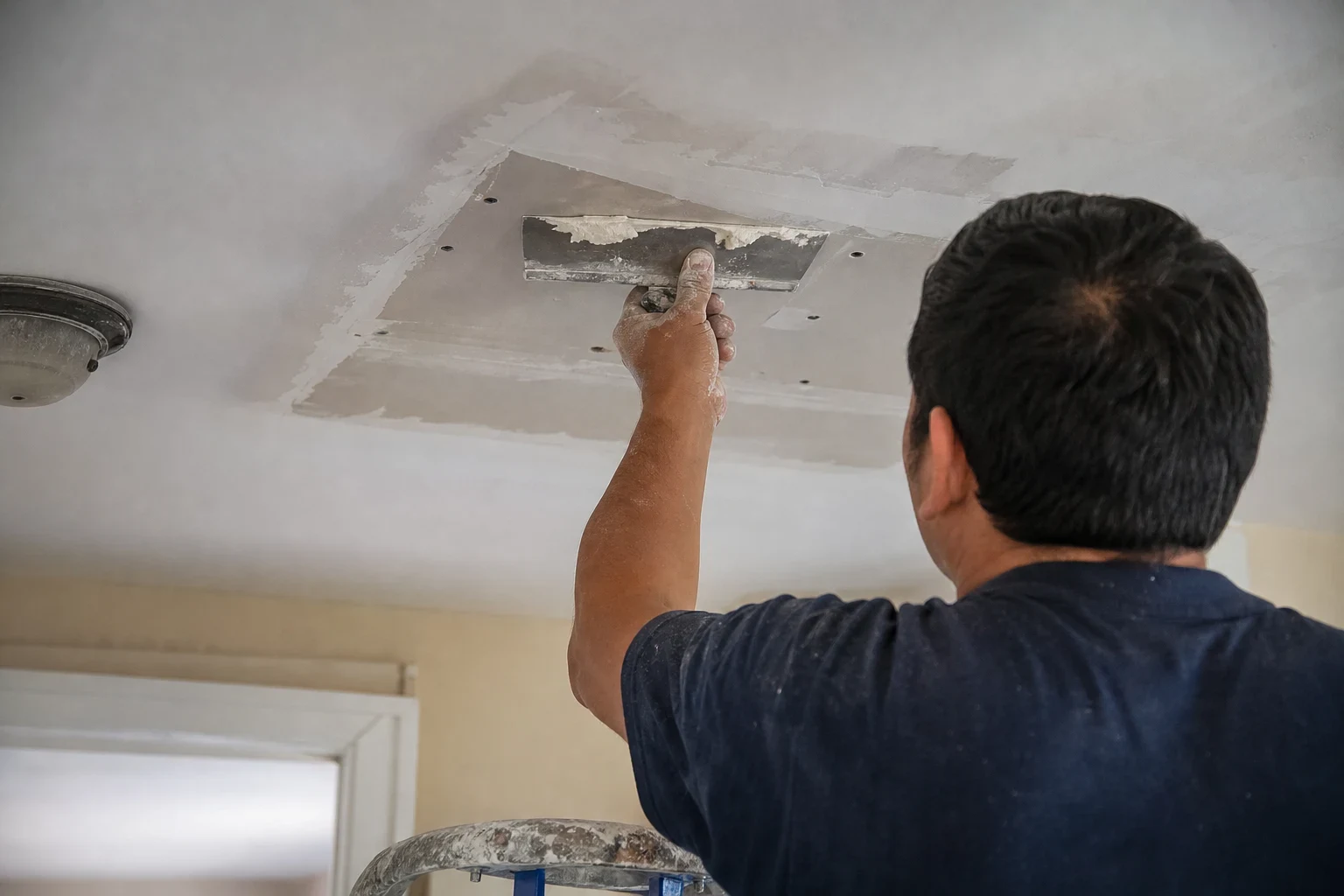
Ceiling Repair
Cracked tape seams, popped fasteners, water-stained panels and sagging drywall overhead, repaired so the fix lasts and the texture blends in.
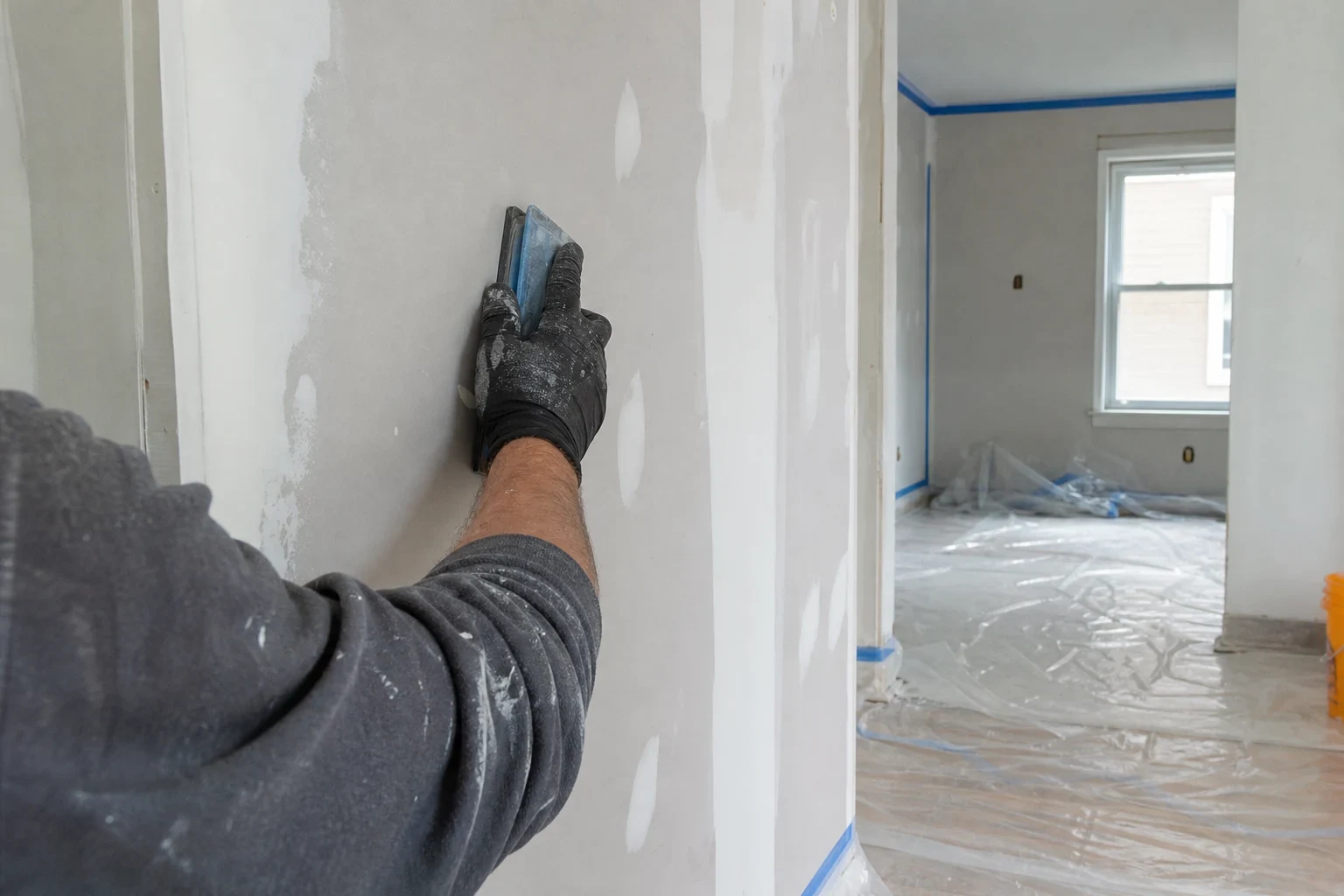
Surface Prep and Sanding
We level joint compound, seal torn paper and prime bare drywall so the next coat of paint goes on flat and holds up longer.
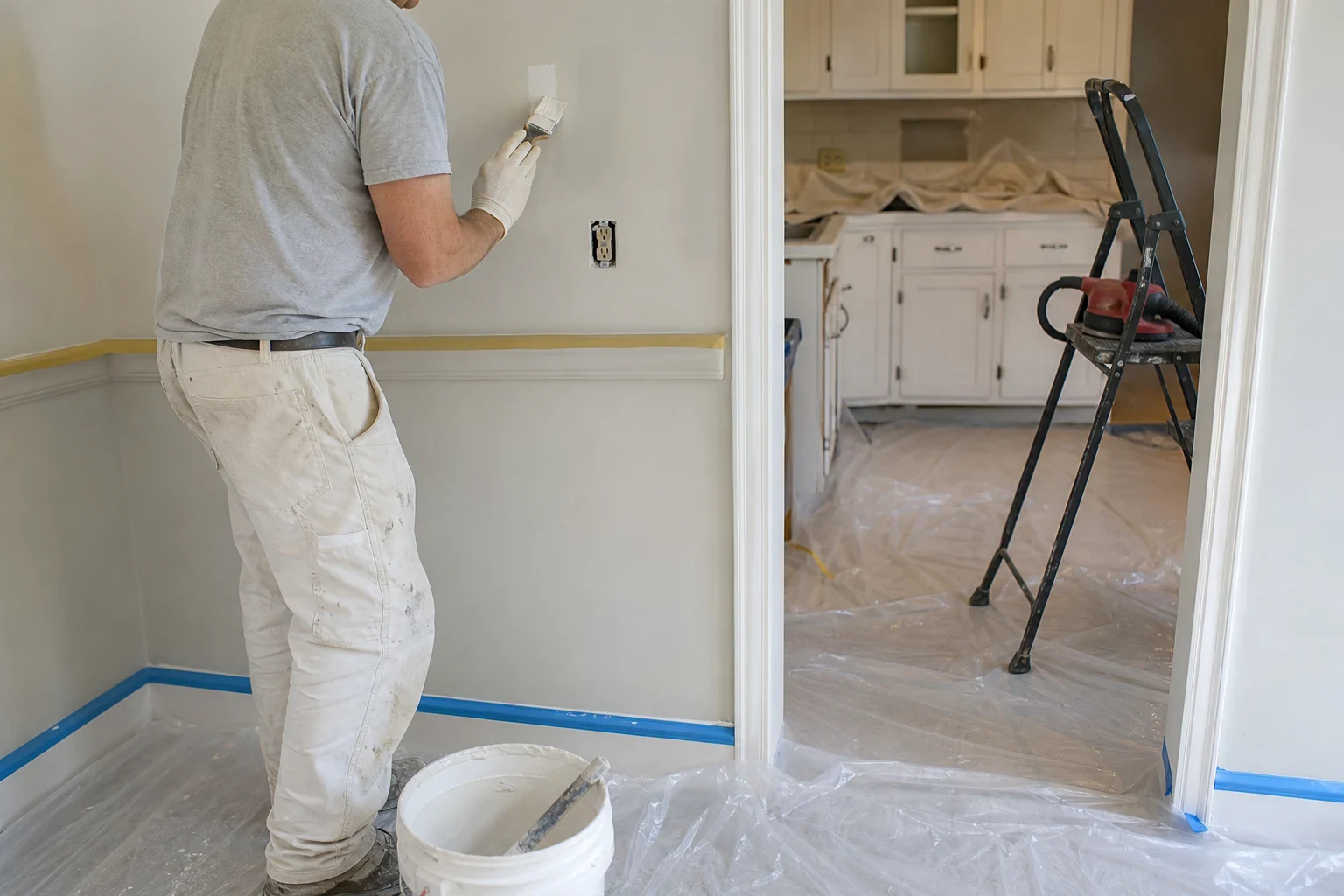
Paint Touch-Ups
We prime fresh compound, match color and sheen, and feather the edges so a repaired spot reads as part of the wall instead of a shiny square.
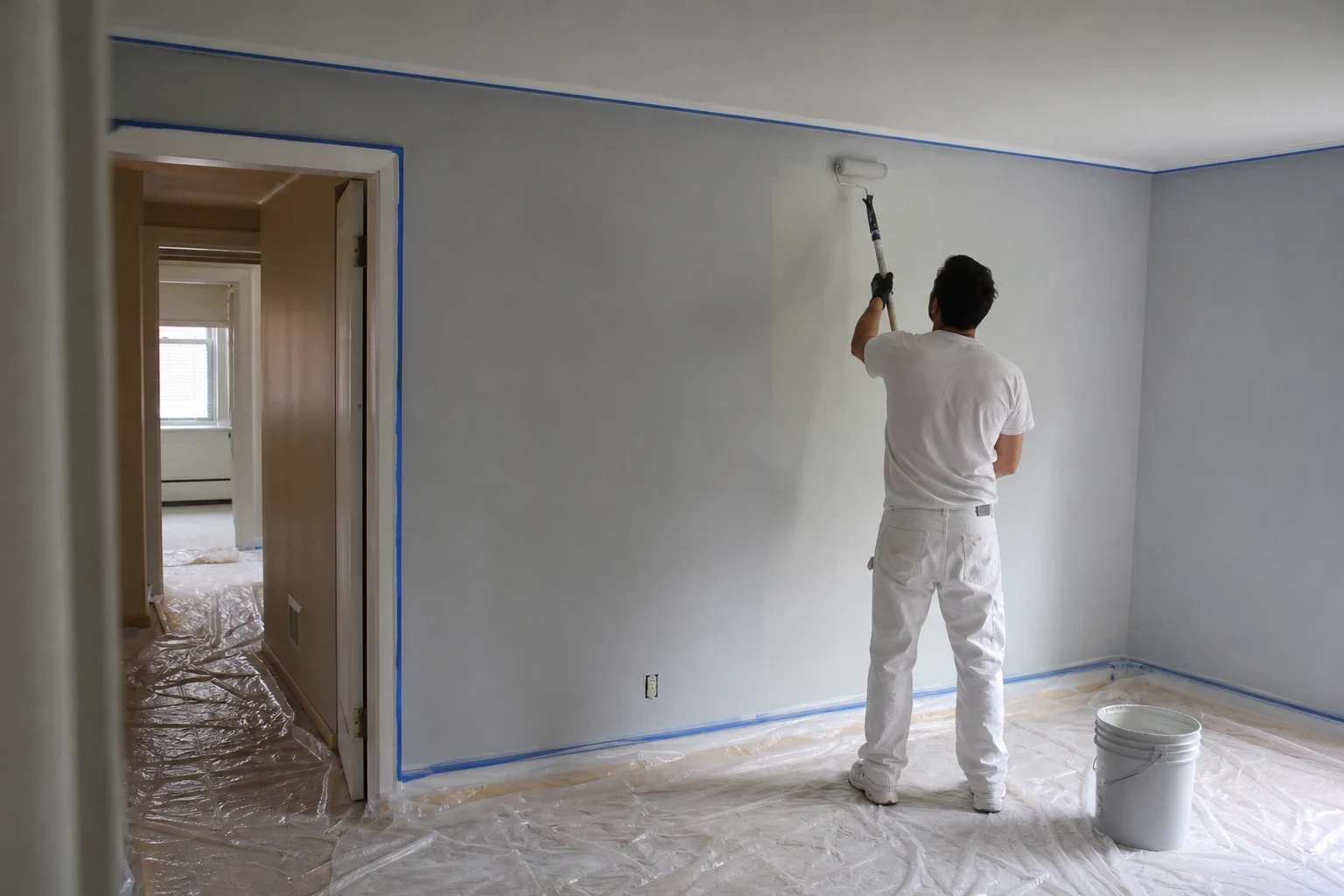
Painting After Drywall
We prime and paint the walls and ceilings our drywall work touches, choosing primer, sheen and paint grade for how each room is used.
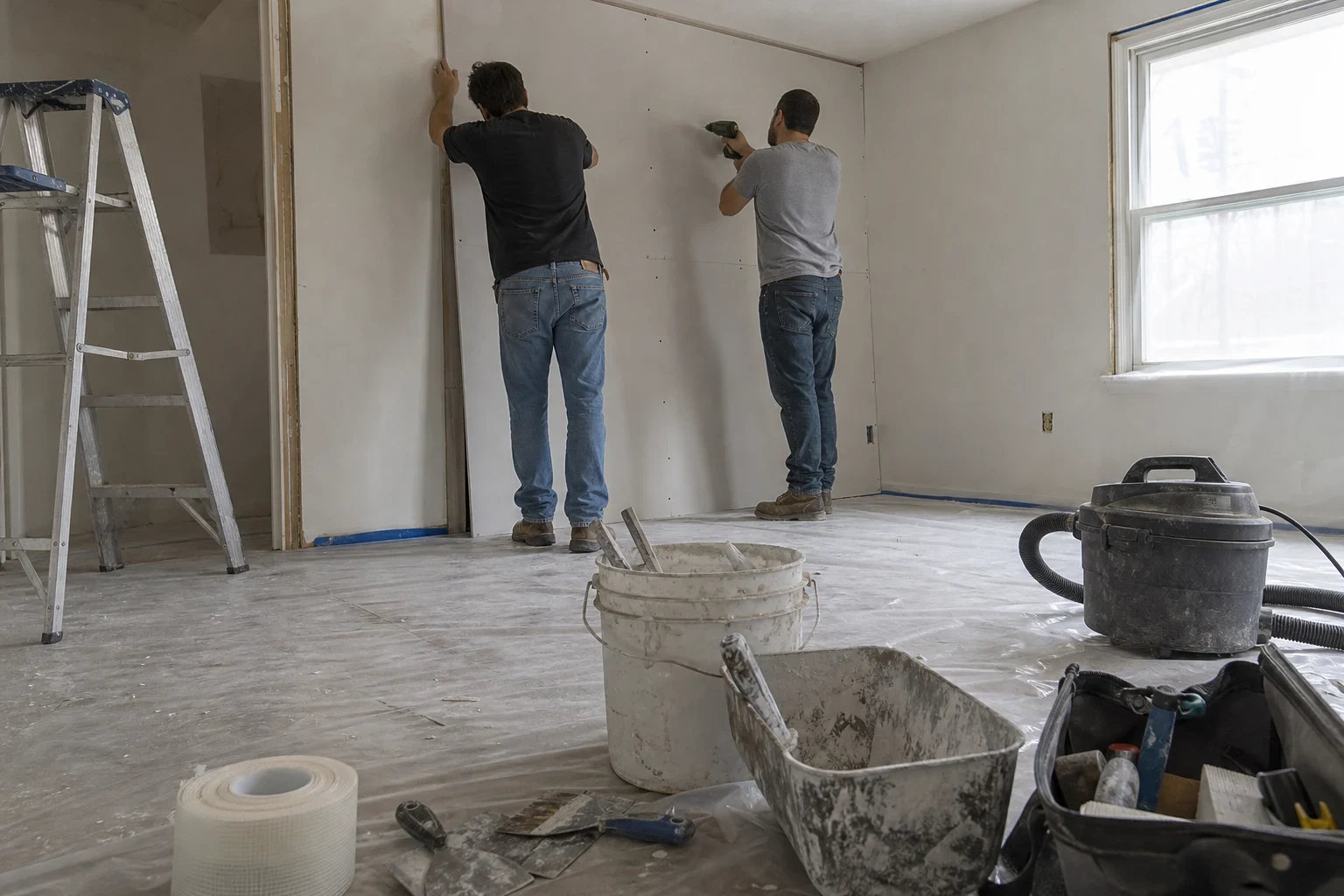
About Drywall Repair Kearny
Walls and ceilings are the whole of our trade. From a single doorknob hole to a room of new board, we repair, patch, hang and finish drywall for homeowners, landlords and property managers around Kearny, and we leave each surface smooth and ready for paint.
We approach every job with one question in mind: what will this repair look like in five years? Sometimes the answer is a simple patch. Sometimes it is cutting out a full sheet, adding blocking or skim coating a wall, because the cheaper fix would fail sooner and cost more in the end. We tell you which one we would choose and why, and the choice stays yours.
Why Our Repairs Stay Fixed
A patch that cracks again in a year costs you twice. We look for the reason the wall failed and price the fix that addresses it.
We find the cause first
A crack running diagonally from a door corner usually means movement in the framing, not bad tape. Nail pops point to fasteners backing out of shrinking studs. We name the cause so the repair matches it, instead of filling the same crack every winter.
Two prices, compared honestly
When there is a choice, we show you both: a cheaper spot repair and a fuller repair with a longer life. You see what each one costs and what each one is likely to need later, then you decide.
The right compound for the job
We use setting-type compound for deep fills and tape coats because it cures hard and shrinks little, then lightweight compound for the finish coats because it sands smooth. That pairing resists cracking better than a single bucket of premixed mud.
Texture and sheen that disappear
An invisible repair depends on matching what is already there, whether that is orange peel, knockdown or a smooth level-5 surface. We test texture on scrap board before we touch your wall.
A clean work area
We cover floors, mask off doorways and use sanding equipment that pulls dust into a vacuum. The room is swept and wiped down before we leave each day.
Where We Work
We are based in Kearny and handle drywall and ceiling repair throughout the surrounding area. That includes Harrison, Newark, Jersey City, East Orange and Union City, as well as North Bergen, Hoboken, Bloomfield, Belleville and Nutley.
- Kearny
- Harrison
- Newark
- Jersey City
- East Orange
- Union City
- North Bergen
- Hoboken
- Bloomfield
- Belleville
- Nutley
If you are close by but do not see your town listed, call and ask. We will tell you plainly whether we can take the job.
How a Repair Job Runs
Most repairs follow the same four steps. Larger hanging and finishing jobs simply repeat the coating stage more times.
- 1
Phone call and look at the damage
You call and describe what you are seeing. We set a time to come out, check the wall or ceiling, probe for soft spots and figure out why it failed.
- 2
Written estimate with options
You get a line-item estimate. Where it makes sense, it shows a quick repair and a longer-lasting repair side by side, so you can weigh the up-front cost against how long each should hold.
- 3
Prep, repair and coating
We protect floors and furniture, cut out damaged board, set new fasteners and tape the joints. Compound goes on in thin coats, with drying time between them, because thick coats shrink and crack.
- 4
Sanding, texture and touch-up
We sand with dust collection, match the surrounding texture and prime the repair so paint does not flash. Then we finish with a paint touch-up and clean the room before you see it.
Questions We Hear Often
Why does the same crack keep coming back after it is patched?
Usually the crack was filled with compound but never taped, so any movement reopens it. Seasonal swings between humid summers and dry, heated winters make framing expand and shrink. We cut the crack open, embed paper or mesh tape in setting compound and refinish, which bridges the movement instead of just covering it.
Should I repair my ceiling or replace it after a leak?
It depends on the board itself. If the drywall is firm once dry and only stained, we seal the stain with a stain-blocking primer and touch up. If it sags, feels soft or the paper is peeling, that section needs to come out, because damaged gypsum loses strength and can fail later. We show you what we find before recommending either.
Can you fix plaster walls, or do they have to be replaced with drywall?
Many plaster walls can be repaired. Loose plaster can be reattached to the lath with plaster washers, and holes can be filled and skimmed. When large areas have let go, replacing that section with drywall is often the better long-term value, and we explain the trade-off in the estimate.
Will I be able to see where the wall was repaired?
Our goal is that you cannot. We feather each coat wide, match the existing texture and prime before painting. Lighting matters too, so on walls lit from the side by a window, we may recommend a skim coat over a larger area to keep the surface even.
How long does a typical repair take?
Small dents and nail pops often take one visit. Larger patches and new board usually need two or three visits, because each coat of compound has to dry before the next goes on. Rushing those coats causes shrinkage and cracking, so we plan visits around drying time.
How much dust will there be?
Less than you might expect. We mask the work area, cover floors and furniture, and sand with equipment connected to a vacuum. The area is cleaned at the end of every visit.
Do you work in rental units for landlords and property managers?
Yes. We repair walls and ceilings in occupied and vacant units alike. We can work with tenant schedules and give you a written estimate that clearly lists each repair.
What Moves the Price of a Drywall Job
Two holes the same size can cost very different amounts to repair. The price depends on what is behind the surface and how much finishing it takes to make the repair vanish. Here is what we look at when we put an estimate together.
We look at the damage in person, then give you a written estimate that lists each part of the job. If we open a wall and find something different from what we expected, we show you and talk it through before any extra work.
- Size and number of repairs
- A few small dents can be filled and finished in one visit. A large hole needs new board, backing strips or blocking, and several coats with drying time in between.
- What the wall is made of
- Many older homes in the area still have plaster over wood or metal lath. Plaster repairs take bonding agents and more careful work than standard half-inch drywall, which affects both time and materials.
- Water damage and what is underneath
- After a leak, the visible stain is often smaller than the damaged area. If the board is soft or the paper face has delaminated, we cut back to sound material, and if insulation or framing is wet, it has to dry before we close it up.
- Ceilings and access
- Ceiling repair takes more labor than wall work at the same size because of overhead work, staging and the weight of the board. High stairwell walls and tight spaces add setup time.
- Finish level and texture
- A wall that will sit in raking light from a window needs a skim coat for a level-5 finish. Matching a textured ceiling adds steps compared with a smooth wall.
- Paint touch-up
- If you have the original paint, blending is straightforward. If the wall has faded or the color is unknown, the touch-up may need to run corner to corner so the sheen and color read evenly.
Get a Repair That Is Worth Paying For Once
Tell us what happened to the wall or ceiling. We will come look, explain your options and how long each one should last, then put it all in writing.