ServicesPaint Touch-Ups
Paint Touch-Ups in Kearny
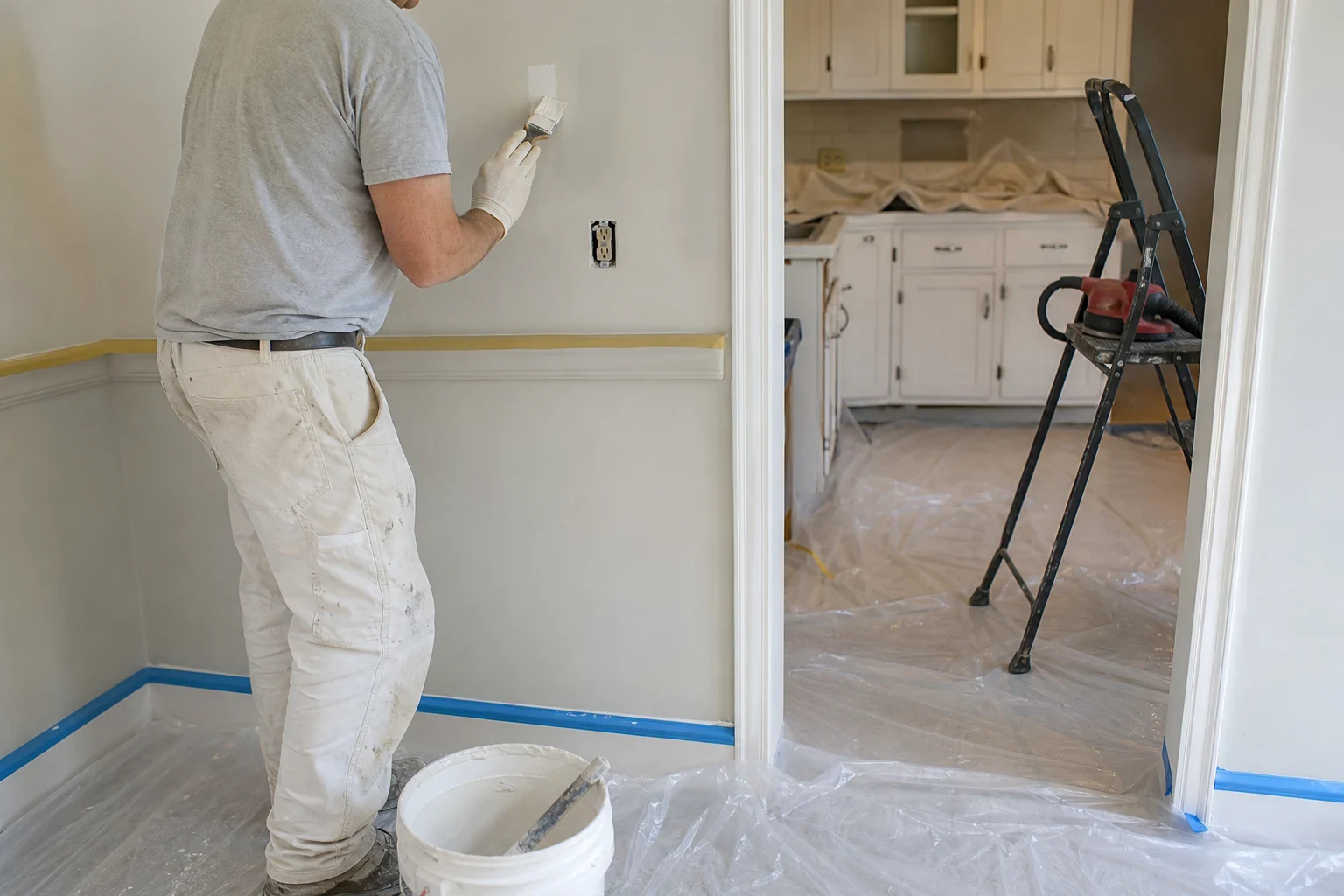
A good drywall patch can still give itself away if the paint over it is wrong. We prime the repair, match the color and sheen of what is already on your wall, and blend the edges so the spot disappears in daylight and lamplight.
Why a Touch-Up Is Harder Than It Looks
Paint does not dry the same on every surface. Fresh joint compound is porous and drinks paint, while the cured paint around it does not, so an unprimed patch dries duller or shinier than the rest of the wall. That difference is called flashing, and it is the most common reason a repair still shows after it has been painted.
Color drift adds to it. Wall paint fades with sunlight and yellows a little with age, so even the leftover can from the original job may not match a wall that has been up for several years. We check how much the existing finish has shifted before we open a can.
A paint touch-up is the right call when the wall is sound and the damage is limited: a patched hole, a scuffed hallway, a repaired seam or corner bead. It costs less than recoating a whole room, and done properly it lasts as long as the paint around it. Done badly, you pay for it twice.
What Our Paint Touch-Ups Include
- Priming bare compound
- Every patch gets a coat of drywall primer before color goes on. This seals the compound so it absorbs paint at the same rate as the surrounding wall and stops the flashing that makes repairs visible.
- Color matching from your wall
- If you have the original can, we read the formula on the lid. If not, or if the wall has faded, we take a small sample to have the color matched, then test it on the wall before committing.
- Sheen matching
- Flat, matte, eggshell, satin and semi-gloss reflect light differently, and the wrong one shows from across the room. We identify the sheen on your wall and use the same one.
- Feathered edges and matching application
- We roll with a nap that matches the existing stipple and feather the paint out past the repair, so there is no hard rectangle around the patch.
- Carrying to a break point when needed
- When a small area will not blend, we take the coat to the nearest corner, ceiling line or trim edge. Light hits a corner differently, so a slight shift there goes unnoticed.
- A clean work area
- Floors and furniture near the wall are covered, and we clean up before we leave your home.
Signs Your Walls Need a Paint Touch-Up
A patch you can see from the side
Look along the wall toward a window. If the repaired area glows or looks flat compared to the rest, the compound was likely painted without primer.
Scuffs that will not wash off
Flat paint burnishes when it is scrubbed, leaving shiny streaks. In halls and stairways, a touch-up in a more washable sheen can hold up better over time.
Fresh drywall repairs waiting for paint
After drywall patching or wall repair, the compound is sanded smooth but still bare. Paint protects it and finishes the job.
Mismatched spots from past touch-ups
Older homes often carry layers of earlier dabs in slightly different colors. We can blend these back into one consistent surface.
Marks left after hardware comes down
Shelves, TV mounts and curtain rods leave filled holes and outlines. A primed, matched touch-up makes the wall look like nothing was ever hung there.
What Moves the Price of a Paint Touch-Up
Most touch-up cost comes from prep and matching, not from the paint itself. A job that looks small can take longer if the color has faded or the sheen is hard to read. We explain the trade-off between blending a spot and carrying the coat to a corner, so you can weigh what you spend now against how long the result will look right.
Number and size of spots
A few patched nail holes take far less time than a hallway of scuffs and repaired dents.
Color and sheen match
If the original paint is on hand and the wall has not faded, matching is quick. A custom match or a wall that needs to be carried to a break point adds labor and material.
Condition of the repair underneath
Patches that need re-sanding, a skim coat or texture matching before paint add a step. It costs a little more up front and avoids a touch-up that fails later.
Ceiling height and access
Stairwells and high ceilings need ladders or planks, and furniture that has to be moved takes time.
How a Touch-Up Visit Runs
- 1
Inspect the finish
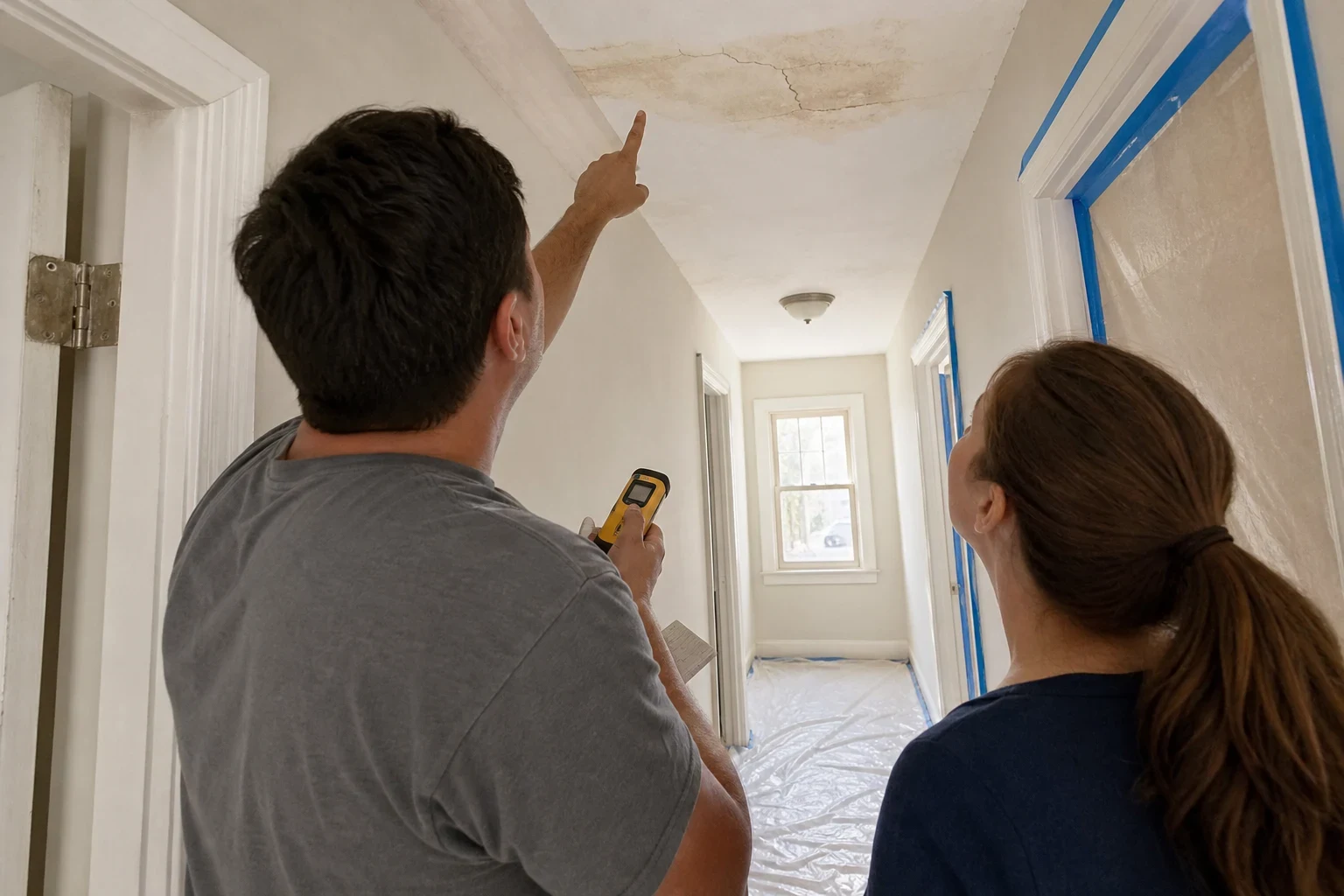
We look at the color, sheen and texture of the wall, and at the repairs underneath. If the compound is cracked or the patch edge shows, we fix that first, since paint will not hide a ridge.
- 2
Prep and prime
We cover the floor, lightly sand the repair and the surrounding paint, wipe off dust, and prime any bare compound or stained area.
- 3
Test the match
A small swatch goes on the wall and dries before we commit. Wet paint always looks darker, so we judge it dry and in the room's own light.
- 4
Apply and blend
We cut in where needed and roll the color out past the repair, feathering the edges. Two thin coats blend better than one heavy coat.
- 5
Check and clean up
We look at the wall from several angles once it dries, then pick up drop cloths and leave the room ready to use.
Paint Touch-Up Questions
Can I just use the leftover paint from when the house was painted?
Sometimes. If the can was sealed and stored above freezing, the color may still be close. Walls fade, though, and old paint can thicken or separate, so we test it on the wall first rather than assume it matches.
Why does my touch-up look shinier than the rest of the wall?
Usually because the patch was not primed, or the touch-up was brushed while the wall was rolled. Bare compound and brush strokes both change how light reflects. Priming and matching the original application method fixes it.
Do you match paint if I don't know the brand or color name?
Yes. We take a small chip from an inconspicuous spot and have it matched, then confirm the sheen ourselves. We test the result on the wall before painting the repair.
Will a touch-up on flat paint show more or less than on satin?
Flat paint hides touch-ups best because it barely reflects light. Satin and semi-gloss show every difference in film thickness, so on those finishes we are more likely to recommend carrying the coat to a corner.
How soon can paint go on after a drywall patch?
Once the joint compound has fully dried, which depends on how thick it was applied and the humidity in the room. Painting over damp compound can cause bubbling and shrinkage, so we wait rather than rush it.
Make the Repair Disappear
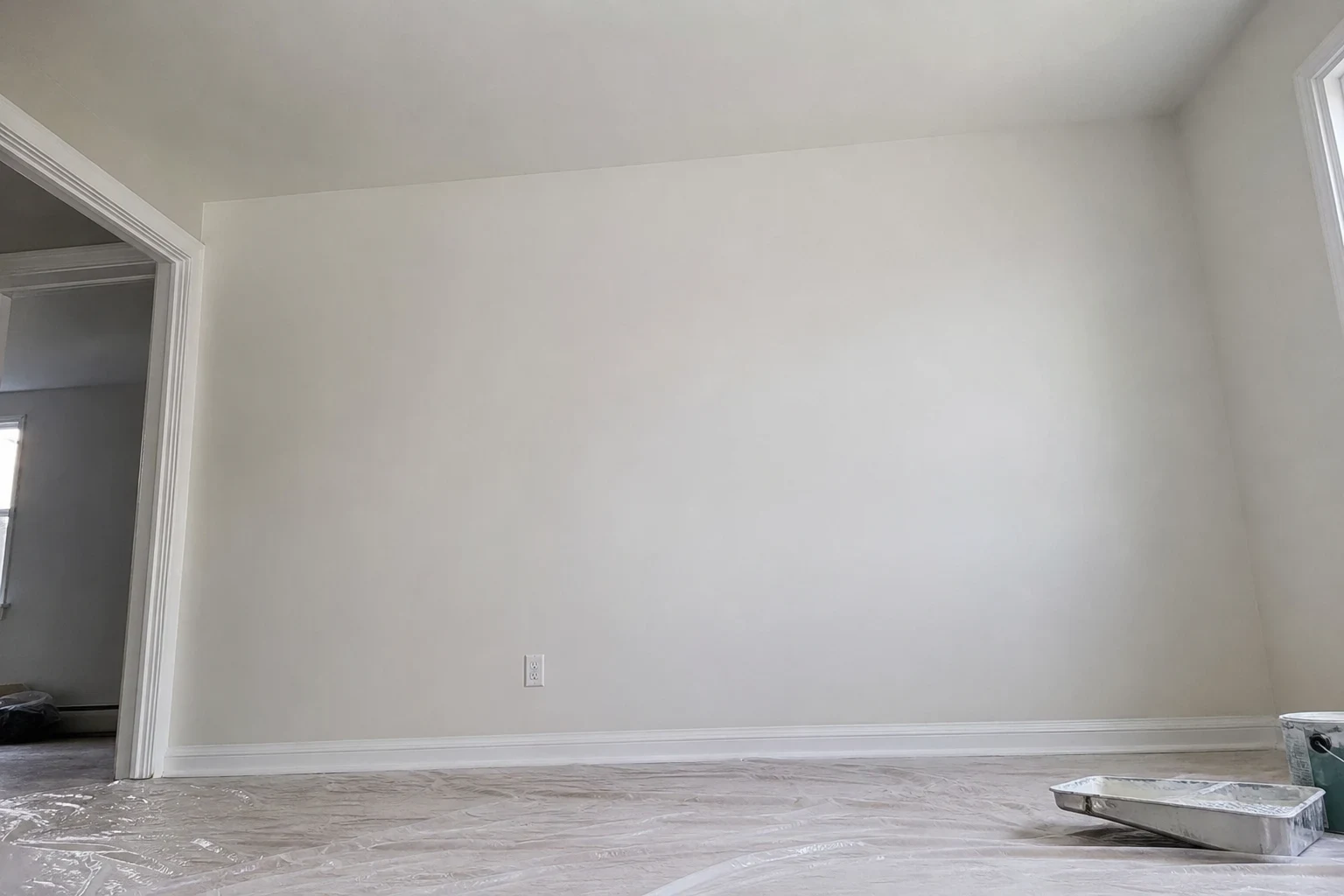
Tell us what the wall looks like and what was repaired. We will explain whether a spot touch-up will blend or whether carrying it to a corner is the better long-term choice.