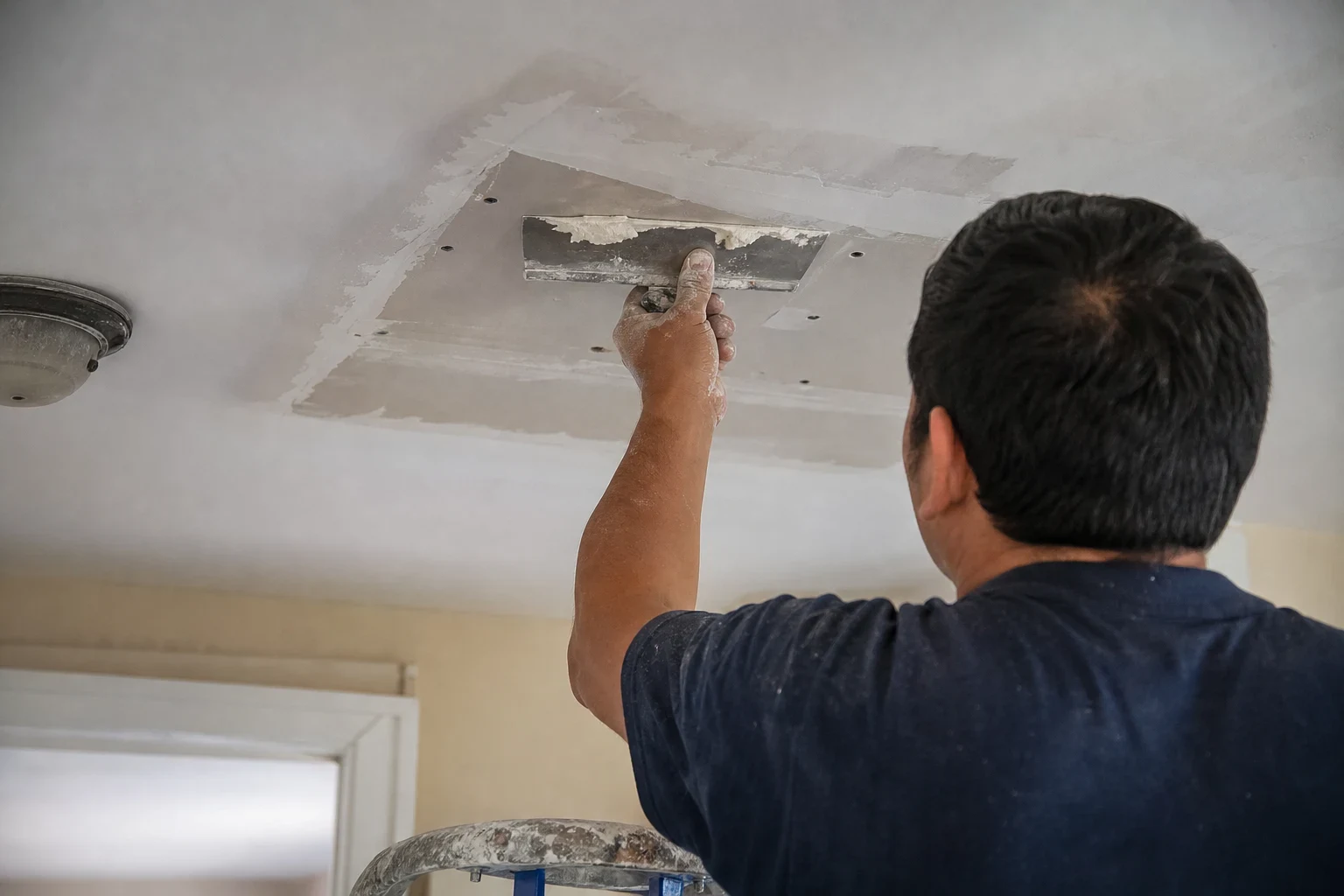
ServicesCeiling Repair
Ceiling Repair in Kearny, NJ
We repair cracked seams, nail pops, water damage and sagging drywall on ceilings, then match the texture so the repair disappears. Before we quote, we find out why the ceiling failed, because a patch over an unsolved cause usually comes back within a season or two.
What ceiling repair covers and when it makes sense
A ceiling takes different stresses than a wall. Gravity pulls on every fastener, heat and humidity collect near the top of a room, and a leak from above lands on the drywall first. That is why ceiling damage tends to show up as long seam cracks, rows of popped screw heads, brown rings or a panel that has started to belly downward.
Our job is to pick the repair that holds up over the years, not just the cheapest one today. A small stain on sound drywall may only need a stain-blocking primer and a paint touch-up. A soft, crumbling section needs to be cut out and replaced. A sagging ceiling often needs refastening or new board, and we will tell you plainly which one you have.
Many older homes around Kearny and Harrison still have plaster ceilings, sometimes with drywall laid over them later. We check what is actually up there before deciding how to repair it.
What the work includes
- Finding the cause first
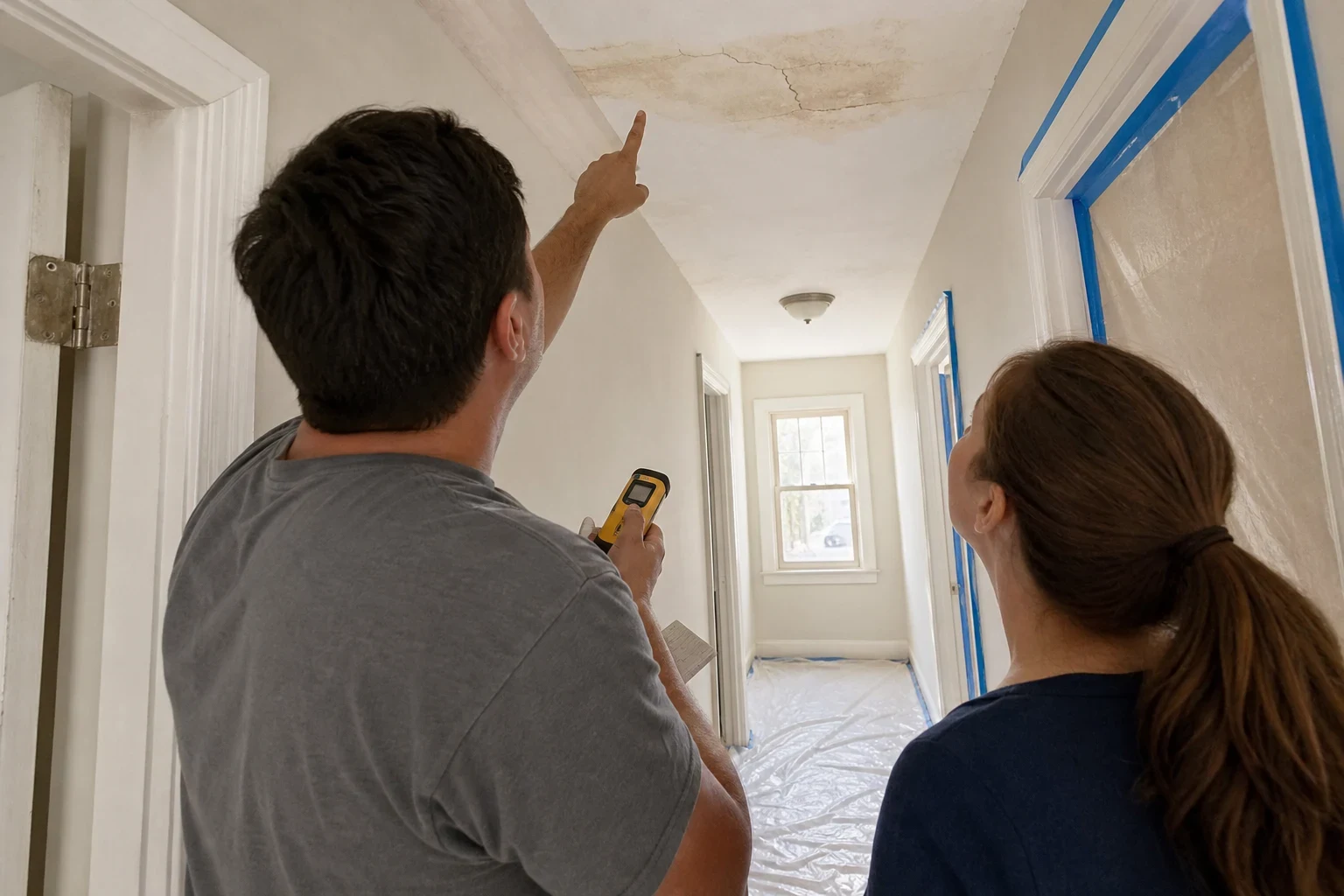
- We check stains with a moisture meter to confirm whether the area is still wet. If a leak from above is still active, we tell you before any repair so you are not paying twice.
- Seam and crack repair
- Cracked tape joints get the loose tape cut out, then are re-taped and bedded in setting compound, which cures harder and shrinks less than premixed mud. That matters overhead, where seams flex with seasonal movement.
- Nail pop and fastener fixes
- Popped nails are a common sign of older framing drying out. We drive a drywall screw beside each one to pull the board tight to the joist, set or remove the nail, and feather the spots flat.
- Section replacement
- Water-softened or crumbling drywall is cut back to solid material and to the nearest joists. The new piece is screwed off, taped and finished. On ceilings we use board rated to resist sagging between framing.
- Texture matching
- Popcorn, knockdown, orange peel and smooth finishes each need a different approach. We test the match on a scrap or a hidden corner before applying it to the repair.
- Priming and cleanup
- Water stains get a shellac-based stain blocker so they do not bleed back through. We cover floors and furniture, contain dust, and leave a clean work area.
Signs your ceiling needs repair
Brown rings or yellow spots
These are tannins and minerals left behind by water. Ordinary ceiling paint will not hide them for long, and the drywall underneath may already be soft.
A long crack along a seam
A straight crack usually means the tape joint has let go. Caulking it or painting over it only hides it until the next change in season.
Rows of small bumps or circles
Popped fasteners show up as raised dots, often in lines that follow the joists. Left alone, the board can loosen further.
Sagging or bowing
A ceiling that dips between joists may have wet drywall, too few fasteners, or board too thin for the joist spacing. Have it looked at soon, since it rarely gets better on its own.
Peeling or bubbling paint
Blistering paint overhead often points to moisture, usually under a bathroom or near an exterior wall.
What moves the cost of ceiling repair
Ceiling work costs more per square foot than wall work because it is slower, overhead and messier to contain. The final price depends mostly on what we find once we open things up. We explain each factor before work starts so the number makes sense.
Size and extent of damage
Spot repairs, a single seam, or a full section cut out to the joists are very different amounts of labor, material and drying time.
Texture type
Smooth ceilings need extra skim coats and sanding to hide a repair. Popcorn and knockdown take time to match, and very old textures can be hard to blend.
Height and access
Stairwells, cathedral ceilings and rooms full of furniture need more setup and staging than an empty room with an eight-foot ceiling.
What is underneath
Plaster with drywall over it, undersized framing, or hidden moisture can change the scope. We show you what we found before going further.
Number of visits
Each coat of compound has to cure, so deeper repairs need return trips. Grouping several ceiling or wall repairs into one job keeps that cost down.
How a ceiling repair job runs
- 1
Look and measure
We inspect the damage, check moisture, and look at texture and fastening across the whole ceiling. If an older popcorn finish may contain asbestos, we recommend testing before we disturb it.
- 2
Explain your options
You get the repair choices side by side, with how long each should last and what upkeep it needs. Sometimes a slightly larger repair now saves a second visit later, and we show you why.
- 3
Protect the room
Drop cloths go down, furniture is moved or covered, and we seal doorways with plastic when sanding will be involved.
- 4
Repair, dry and finish
Compound needs time to cure between coats, so most ceiling jobs take more than one visit. We sand with dust control, match the texture and prime the area.
- 5
Final check
We look at the repair under raking light from a window or a work lamp, since overhead flaws show up at an angle. Then we clean up and walk you through it.
Ceiling repair questions
Can you just paint over the water stain?
Only if the drywall is dry and still firm. We confirm that with a moisture meter, then seal the stain with a shellac-based primer before painting, because regular paint lets the stain bleed back through. If the board is soft, it needs to be replaced.
Will the repair show once it is done?
Our aim is for it not to. We match the existing texture and feather the compound wide, then check it under raking light. The paint touch-up afterward needs to match too, so it helps if you have leftover ceiling paint.
Why does my ceiling crack again in the same spot?
Usually the earlier fix was paint or caulk over a broken tape joint, or premixed compound that shrank. We cut out the failed tape and rebed the seam in setting compound, which handles the seasonal movement much better.
Should I repair or replace a sagging ceiling?
It depends on why it sagged. Dry board that pulled off its fasteners can often be screwed back up and refinished. Board that got wet, or board too thin for the joist spacing, will keep sagging, so replacing it is the better value over time.
Do you fix the leak that caused the damage?
No, we handle the drywall and finish. We will confirm whether the area is still wet and tell you if the source needs fixing first, so the new ceiling is not ruined by the same leak.
Get your ceiling looked at before it spreads
Tell us what you are seeing overhead and we will explain the likely cause and the repair options. You can get your quote by phone and set up a visit.