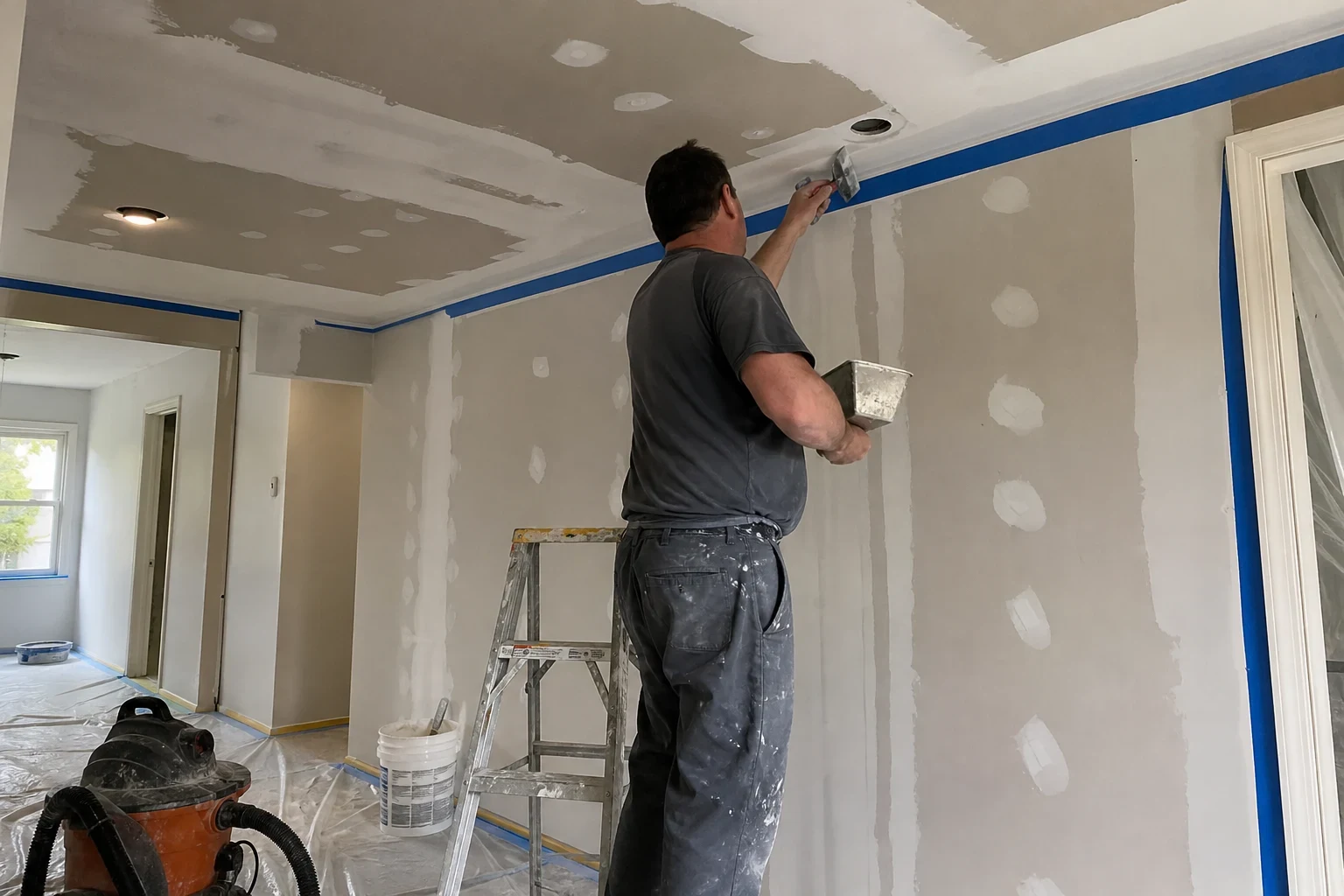
ServicesDrywall Repair
Drywall Repair in Kearny
We repair damaged drywall in your home by finding what broke it first: a past leak, a loose screw, a slamming door, a stressed corner. Then we cut back to sound board, rebuild the joint and match the texture, so you pay for the fix once.
Why a lasting repair starts behind the surface
Drywall is a gypsum core wrapped in paper. It handles everyday life well, but it fails in predictable ways. Fasteners back out as framing dries and shifts. Seams crack where two sheets meet over a door or window header. Water softens the gypsum and lets the face paper delaminate. A quick skim of spackle hides any of these for a while, and then the same line or bump comes back.
We look at the cause before we pick up a knife. A popped nail gets a new drywall screw set beside it. A cracked seam gets cut open, re-taped with paper tape and bedded in setting compound, which cures harder and shrinks less than premixed mud. Water-damaged board gets cut out to dry, solid gypsum. That costs a little more on the day than a surface touch-up, but it usually ends the cycle of patching the same spot every year.
Many Kearny homes see dry radiator heat in winter and humid summers, and that seasonal swing is exactly what reopens a weak repair. Building it right the first time is the cheaper path over the years you own the place.
What our drywall repair includes
- Finding the cause
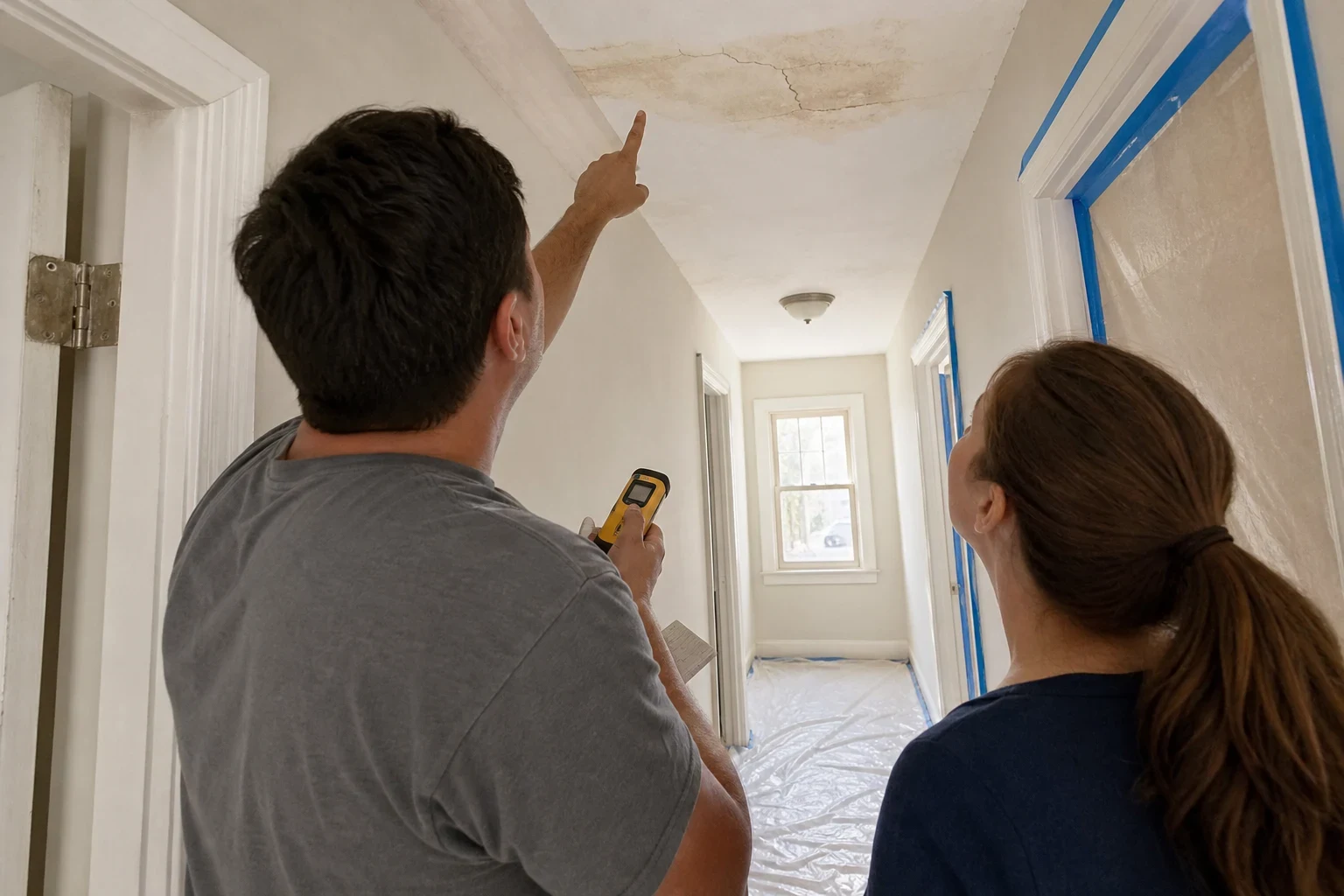
- We check for moisture with a meter, look at fastener patterns and note where cracks start. You get a plain explanation of why the damage happened before we price the fix.
- Cutting back to sound gypsum
- Crumbling, stained or soft board is removed in a clean square or rectangle. New board is cut to fit and secured to the studs or to backer strips so it sits flush.
- Re-fastening and re-taping
- Popped nails are reset or replaced with screws. Joints are taped with paper or mesh depending on the location, and bedded in setting-type compound where strength matters.
- Texture matching and sanding
- Smooth walls get feathered coats sanded flat under a work light. Knockdown, orange peel or older hand textures are rebuilt to match the surrounding surface.
- Primer and paint touch-up
- Fresh compound is primed so it does not flash through the paint. We then do a paint touch-up over the repair using your existing color.
Signs your drywall needs repair
Diagonal cracks at door and window corners
These start at the corner of an opening and run up at an angle. They point to movement in the framing and need re-taping, not just filler.
Round bumps or popped nail heads
A small raised circle in a row along a stud is a fastener working loose. Painting over it does nothing, since the nail keeps moving.
Brown rings or soft spots after a leak
Once the leak is fixed, stained board may still be soft or hold moisture. That section should be cut out rather than sealed over.
Bubbling or peeling tape at seams
Tape that lifts was usually bedded with too little compound. It needs to be cut away and re-run.
Holes and dents from doorknobs or furniture
Small ones are a quick fix. For larger openings, see our Drywall Patching page.
How a repair visit runs
- 1
Look, measure and explain
We inspect the damage, check moisture and tell you what caused it. You get a written estimate that lists each repair area separately.
- 2
Protect the room
We lay floor covering, move what needs moving and tape plastic around the work zone. Sanding is done with a vacuum-attached sander where possible to keep dust down.
- 3
Repair and build up coats
Board is replaced or re-fastened, joints taped and compound applied in thin coats. Each coat needs to set before the next, so most repairs take more than one visit.
- 4
Finish, prime and clean up
We sand, match texture, prime and touch up paint. You get back a clean work area with debris bagged and removed.
What affects the cost of drywall repair
Price depends on how much board is involved and what we find behind it. A shallow dent and a ceiling stain from an old leak are very different jobs. We price each area separately so you can see where the money goes and choose what to fix now.
- Size and number of areas
- Several small repairs in one room cost less per spot than separate trips. Grouping them saves you setup and drying time.
- What is behind the board
- Wet insulation, missing backing or a twisted stud changes the scope. We show you photos before doing extra work.
- Texture and finish level
- Matching a hand-applied texture takes longer than a smooth finish. Walls lit by strong side light from windows need a finer finish to hide the repair.
- Height and access
- High ceilings, stairwells and tight closets need ladders or staging and slow the work. For overhead damage, our Ceiling Repair page covers the details.
Drywall repair questions
Something not covered here? (201) 806-6572
Should I patch the damaged area or replace the whole sheet?
Most damage is repaired by cutting out only the bad section. Full sheets make sense when damage spreads across most of the board or the surface has failed in several places. We will tell you which option costs less over time, not just which is cheaper today.
Will I be able to see where the repair was?
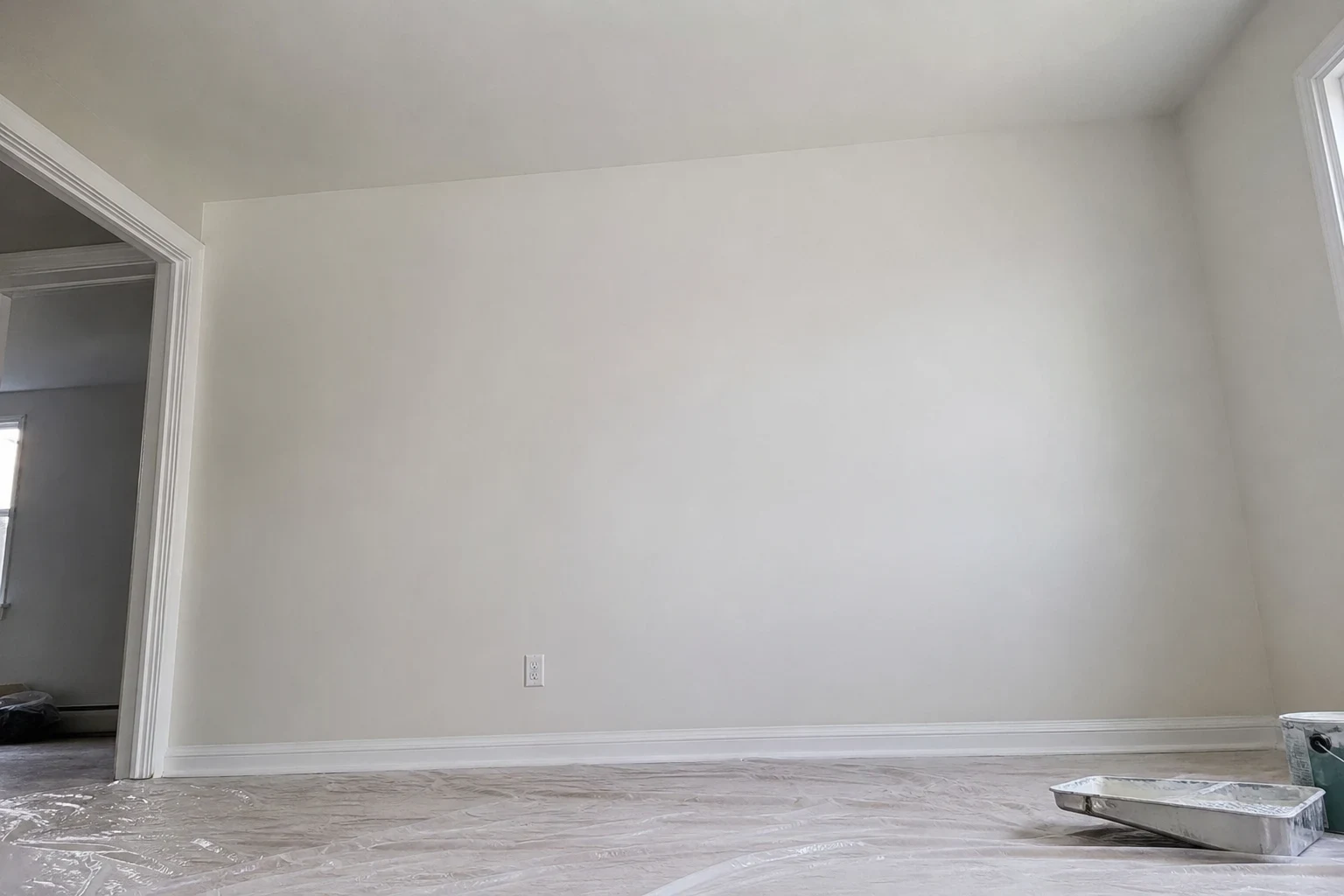
Done properly, no. We feather compound well past the damaged area, match the texture and prime before painting. Paint that has faded over years may show a slight color difference, which we will point out before we start.
Can I just paint over a water stain?
Only if the board is dry and firm. Paint alone often lets the stain bleed back through, and soft gypsum will sag or crumble later. We test moisture first, then either seal the stain with a stain-blocking primer or replace the section.
Does the leak need to be fixed before you come?
Yes. Closing up a wall over an active leak traps moisture and invites mold. Once the source is repaired and the area has dried, we can replace the damaged drywall.
Do you handle repairs for rental units?
Yes. Landlords and property managers use us for repairs between tenants or after damage reports. We itemize each area so the work is easy to document.
Get the wall fixed once
Tell us what you are seeing and where it is. We will explain what likely caused it and what a lasting repair involves.